




The thinking behind Robot SPACELand
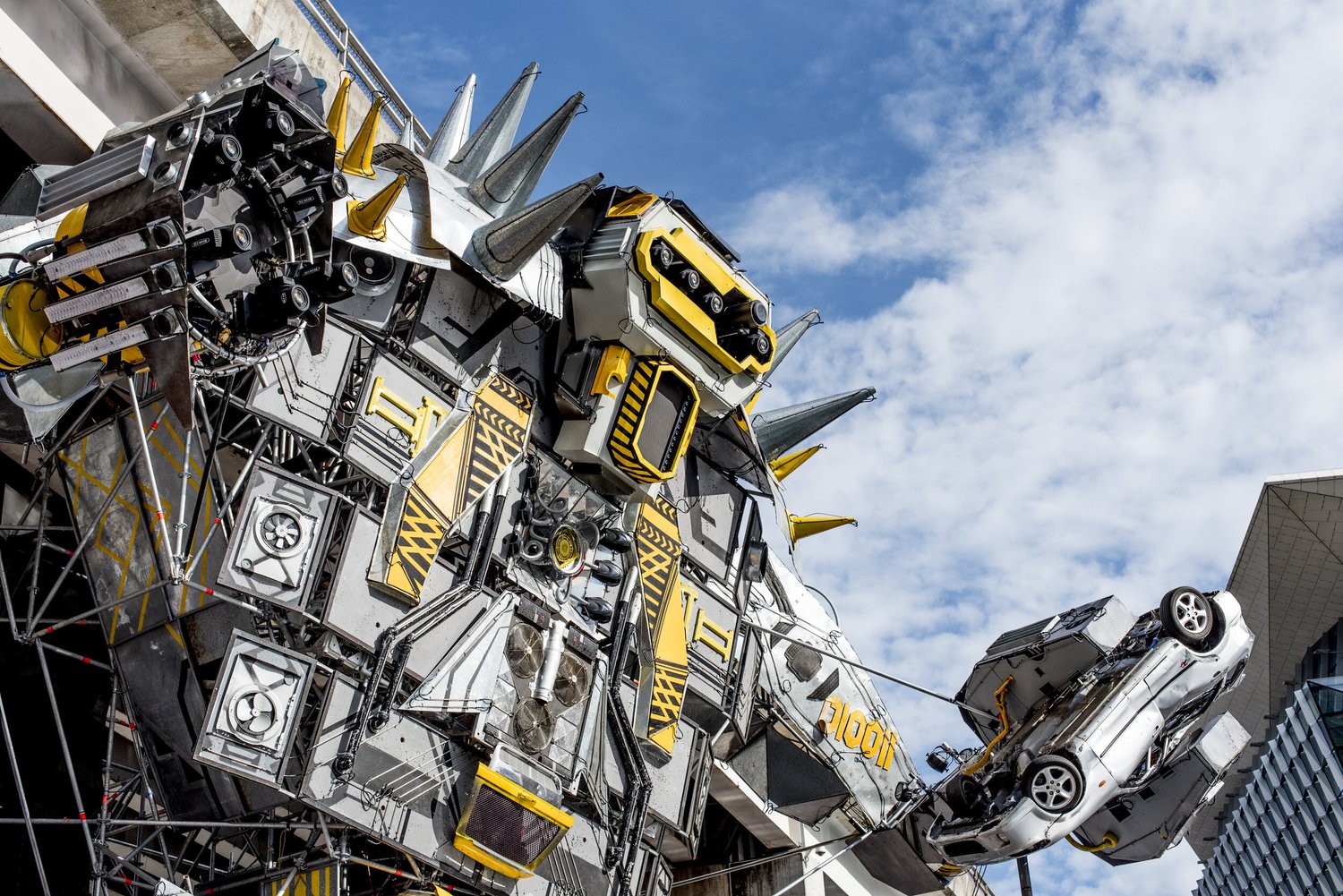
Robot SPACELand began as a festival-stage idea called RageBot: a giant robot built to throw crushed cars and destroy dancefloors.
Then it entered the world of civic public art.
In an early Vivid Sydney boardroom meeting, the direction became clear: public art could not simply glorify destruction. The project needed a different mythology.
There and then, RageBot became EcoBot.
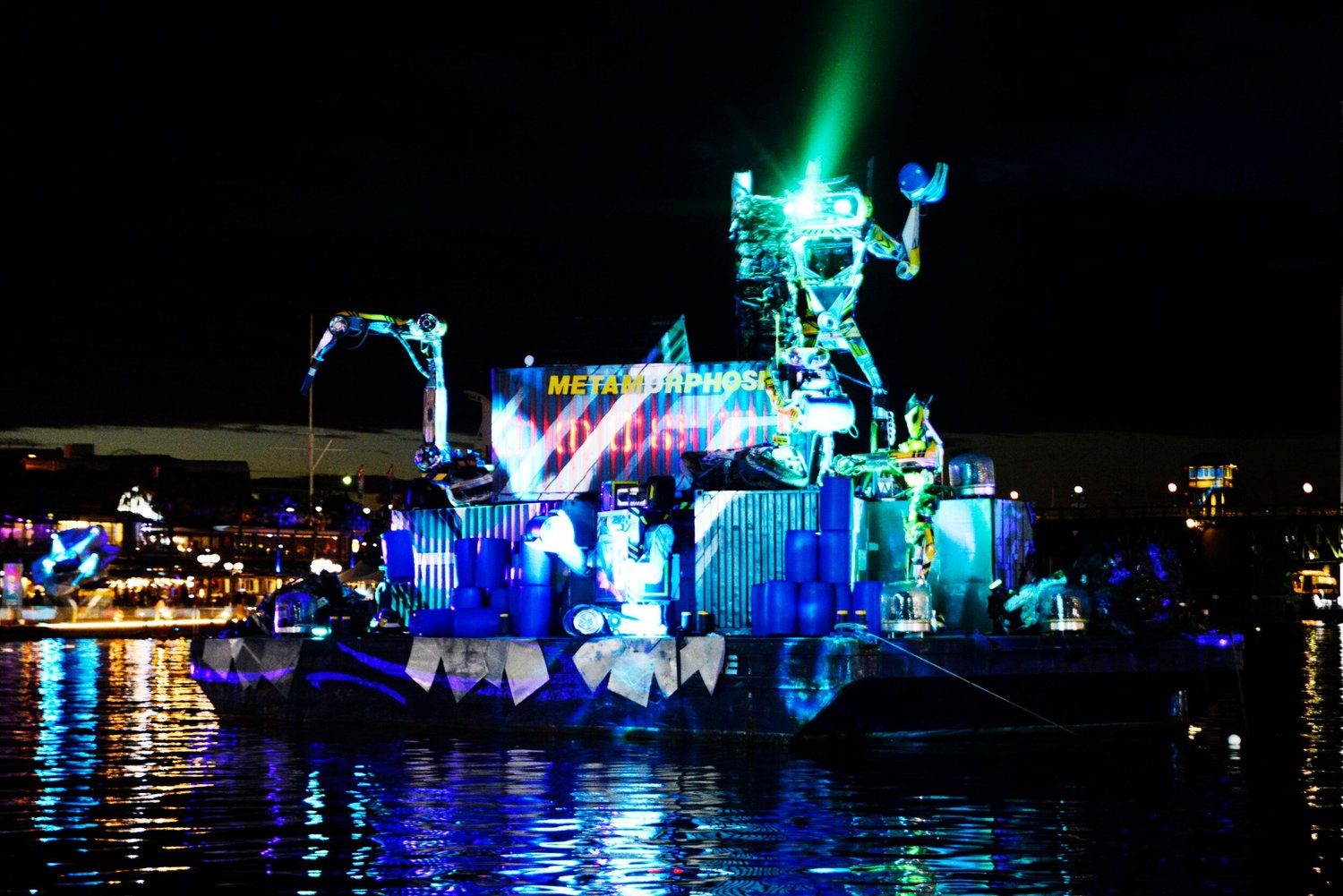
Instead of a machine of destruction, EcoBot became a sleeping guardian: a giant robot awakened by knowledge, transforming discarded resources into the raw material of a regenerated world.
From that moment, story became the organising system for the entire project.
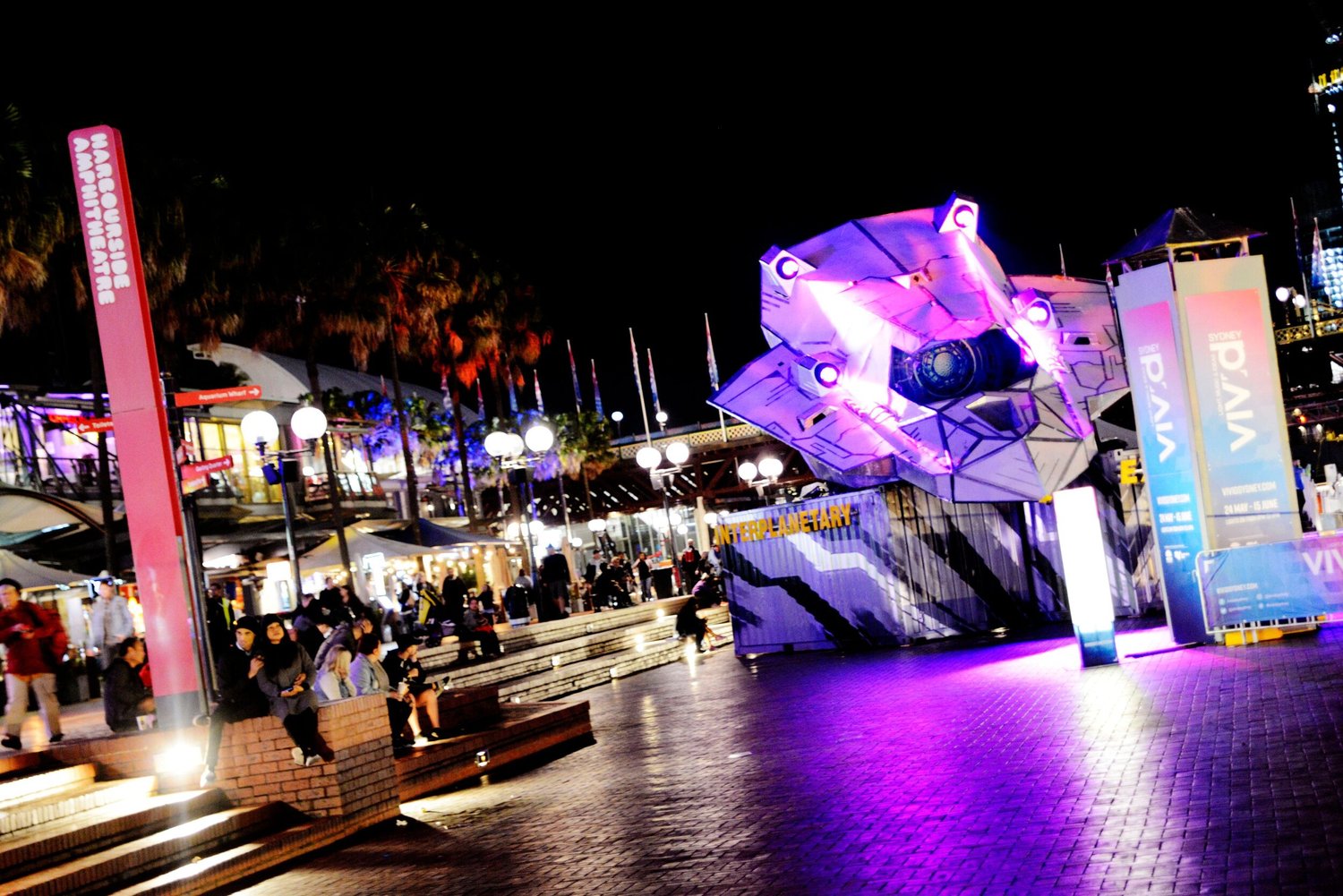
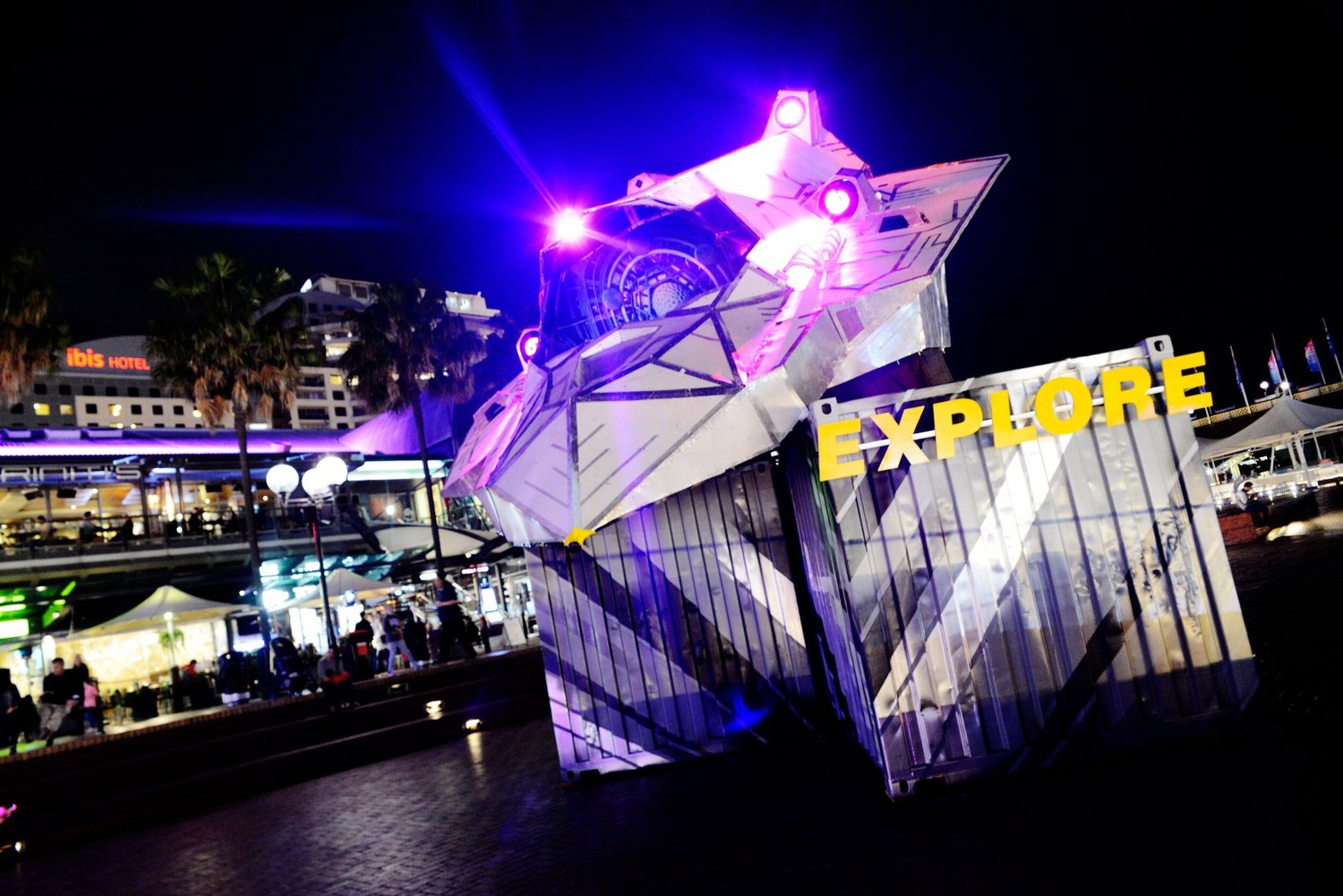
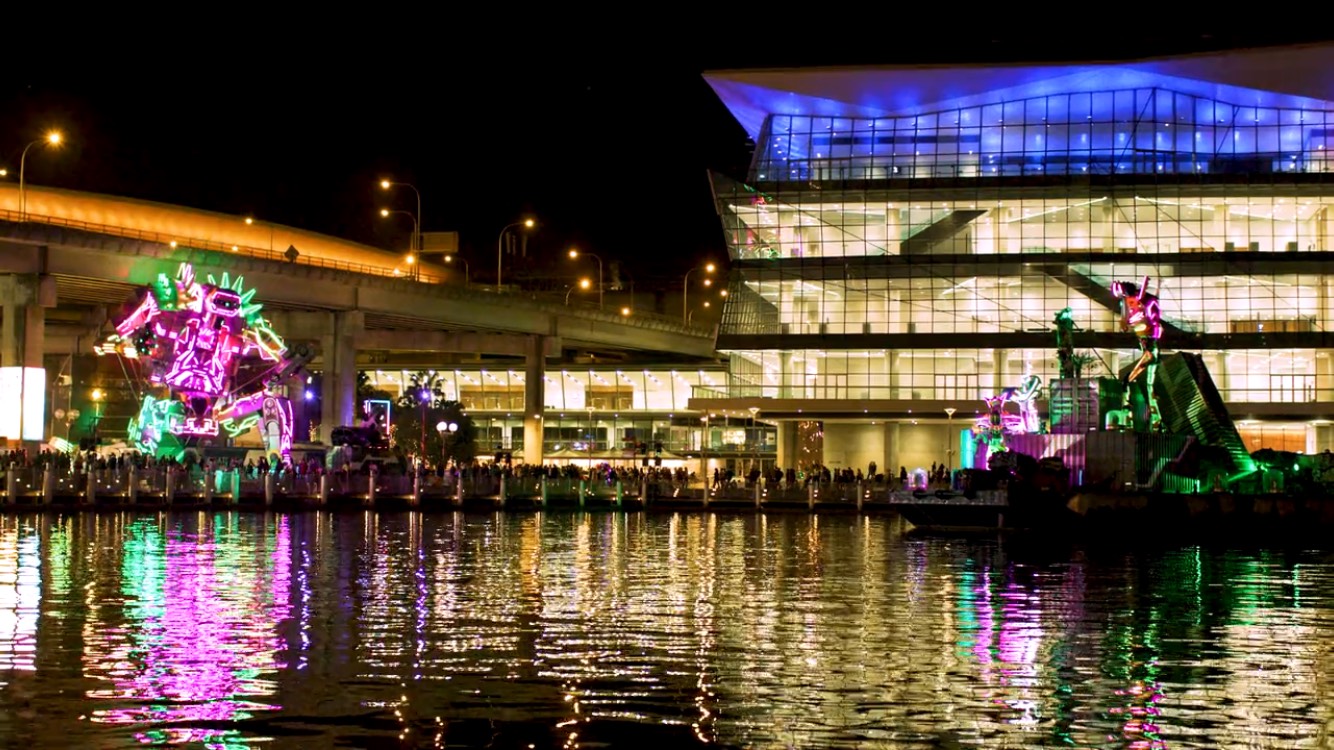
I wrote a space opera that began with Truth Seeker—an eleven-metre projection-mapped spacecraft. When Truth Seeker discovers an ancient glowing knowledge orb, the resulting transmission awakens EcoBot. As EcoBot’s systems come online, she begins processing the mechanical wreckage around her—lifting and compacting raw scrap into structured building blocks to rebuild the environment, shifting the world from dystopia towards renewal.
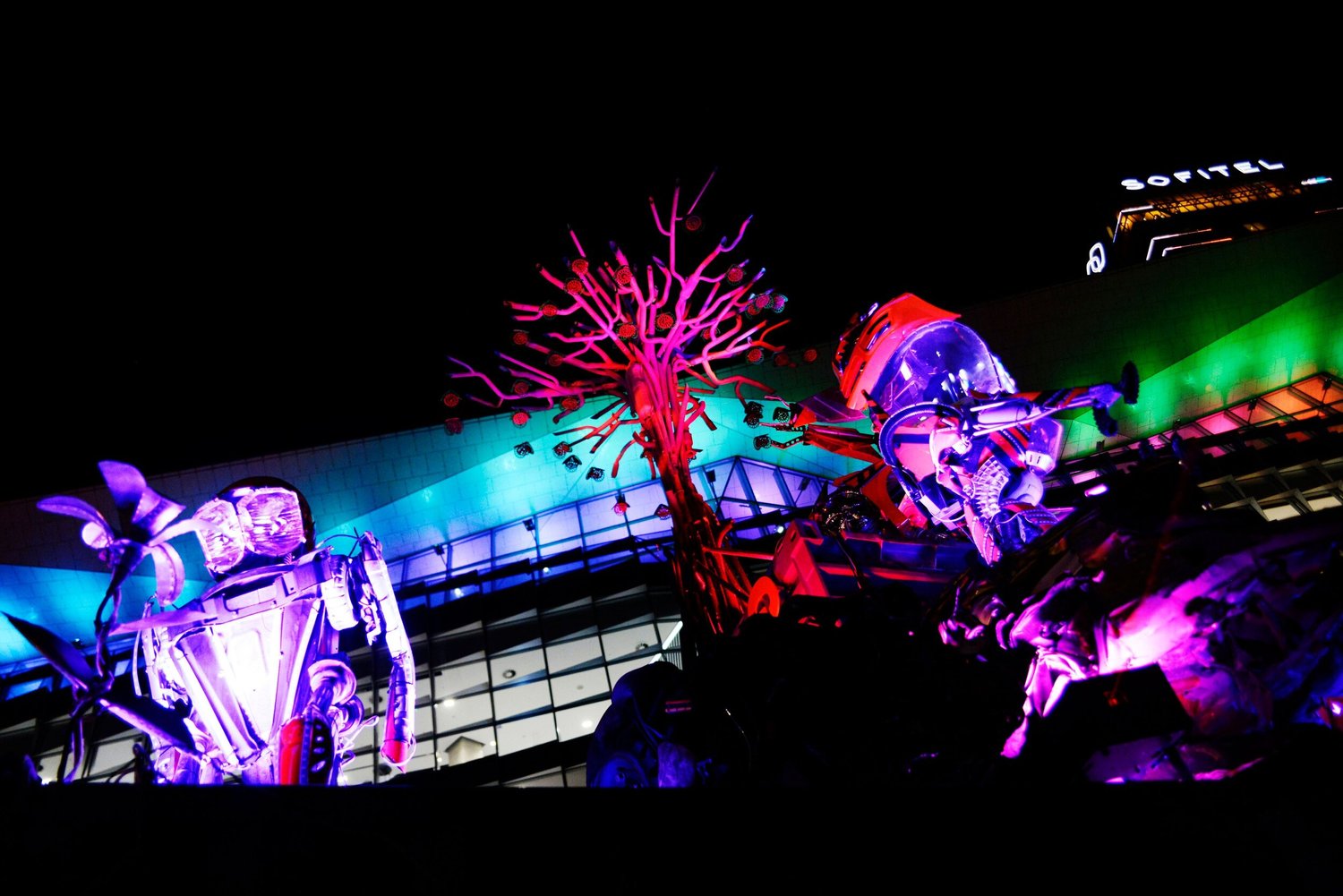
The show moved through light, sound, projection, lasers, robotics and kinetic tableaux across Darling Harbour. What the audience experienced as an immersive world was built from a single narrative logic: knowledge discovered, knowledge transmitted, knowledge awakening change.
That story did more than shape the audience experience. It aligned the production.
Mechanics donated scrap. Car owners donated vehicles. Neighbours made room. Safety inspectors engaged with the vision before reviewing the paperwork. Crane, barge, fabrication, lighting, laser, control and site teams all had something larger than logistics to orient around.
The real challenge was not only engineering a 20-metre robot or synchronising more than 60,000 LEDs.
It was translating underground festival spectacle into a public artwork that could live safely, legibly and meaningfully in the civic centre of Sydney.
Robot SPACELand ran for 21 nights during Vivid Sydney 2019, reaching an audience of more than two million people.
The finale culminated in complete restoration: rain, atmosphere, wildlife, cool regenerative colour and a circle of light expanding outward from EcoBot’s heart.
Experience Breakdown
- Vision & Creative Direction: Conceived, scripted and directed Robot SPACELand—a nine-minute harbour-scale space opera and original public artwork that reached more than two million people across 21 nights.
- Narrative Transformation: Transformed the original RageBot festival concept into EcoBot—a sleeping guardian who awakens the surrounding robotic world, processes the wreckage of a discarded civilisation and begins its renewal.
- Large-Scale Show Integration: Directed the synchronisation of a 20-metre feature robot, an eleven-metre projection-mapped spacecraft, more than 60,000 addressable LEDs, lasers, spatial audio and five surrounding kinetic tableaux.
- Multidisciplinary Leadership: Directed a cross-functional team of 22 specialists across structural fabrication, lighting, AV, automation and live show control.
- Waterfront Operations: Led complex waterfront delivery, including off-site fabrication, crane deployment and marine logistics within the Sydney Harbour precinct.
- Stakeholder Alignment: Negotiated the creative vision and multi-agency approval requirements with Destination NSW, Sydney Harbour Foreshore Authority and CASA, while managing constrained site logistics, safety exclusions and risk planning for a heavy-machinery installation at public scale.
- Narrative as Infrastructure: Used story as an operational framework to align technical crews, specialist vendors, regulators and stakeholders around a shared creative purpose.
Why Robot SPACELand Matters
Robot SPACELand was the project where I learned that story is not decoration.
Story is infrastructure.
By establishing story as infrastructure, I transformed an ambitious harbour-scale engineering challenge into a shared mission that synchronised creative intent, operational execution and civic backing.
By transforming RageBot into EcoBot, the project became more than a giant robot. It became a regenerative myth about knowledge, repair and collective awakening—delivered through engineering, light, sound, logistics and live show control.
Story turns the impossible into a shared plan.