Karnival Festival
Giant Butterfly Stage
Butterfly Stage was not my original creative concept.
That is part of why it matters.
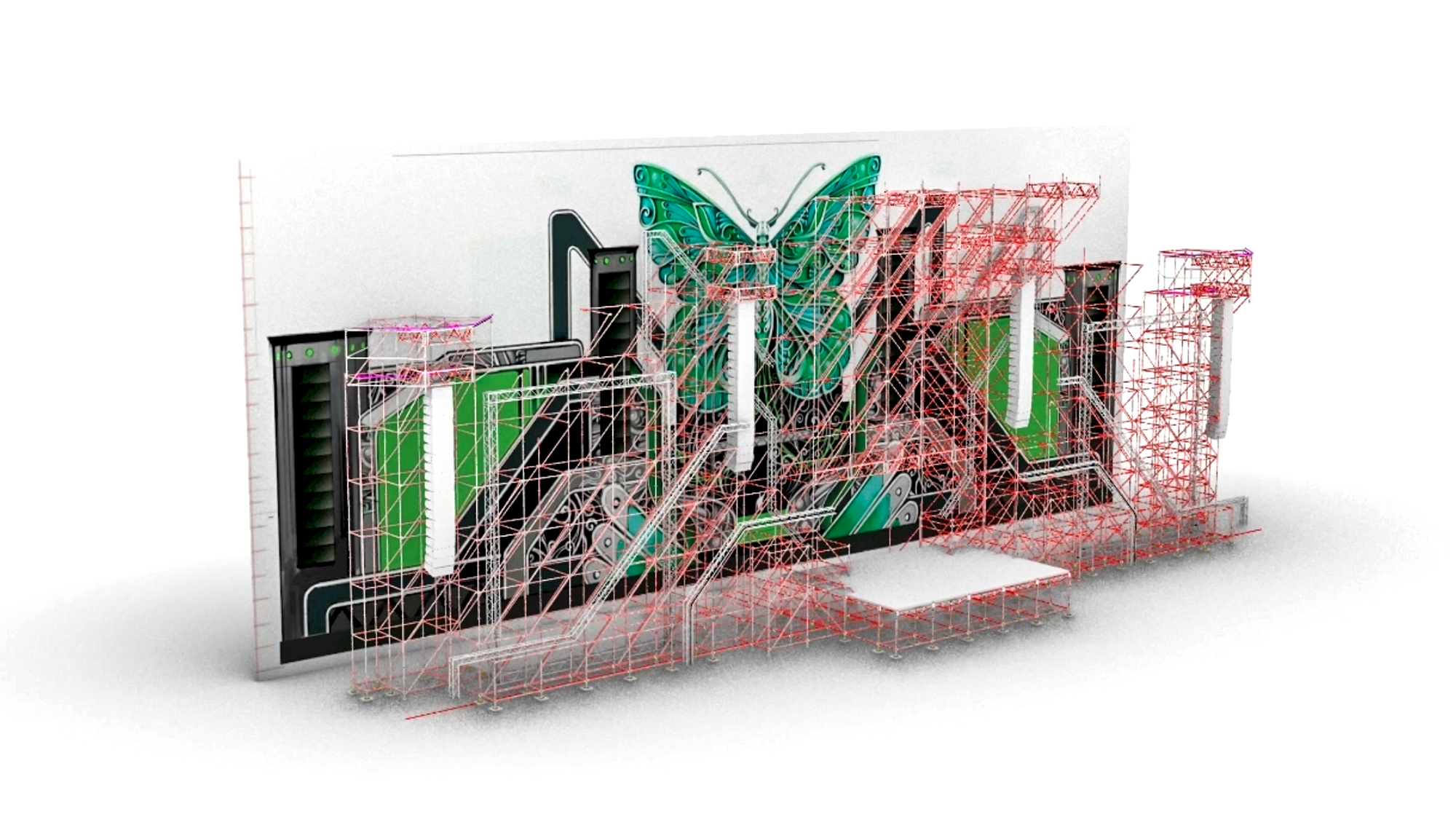
I was handed a 2D design and asked to turn it into a complete 57-metre-wide, 27-metre-high festival stage: scaffold, lift frames, truss integration, stage decoration, CNC files, printed graphics, LED wall masking, scenic treatment, crew planning, site sequencing and show-system coordination.
The entire project came together in approximately six weeks, including a week on site.
At the same time, I was also project managing and technically designing a separate quarter-million-dollar commercial build. The pressure was not abstract. It was time, money, labour, trucks, cranes, scaffolders, riggers, carpenters, lighting, sound, lasers, pyro and a live-event deadline that was not moving.
The work became less about authorship and more about delivery capacity.
My role was to convert the approved visual idea into a buildable production system. I designed the scaffold structure, developed lift frames for lighting truss, prepared decorative CNC and print packages, directed scenic artists, coordinated graphic production and assembled the crew needed to fabricate and install the stage interstate.
As the architecture came together, a story emerged on site.
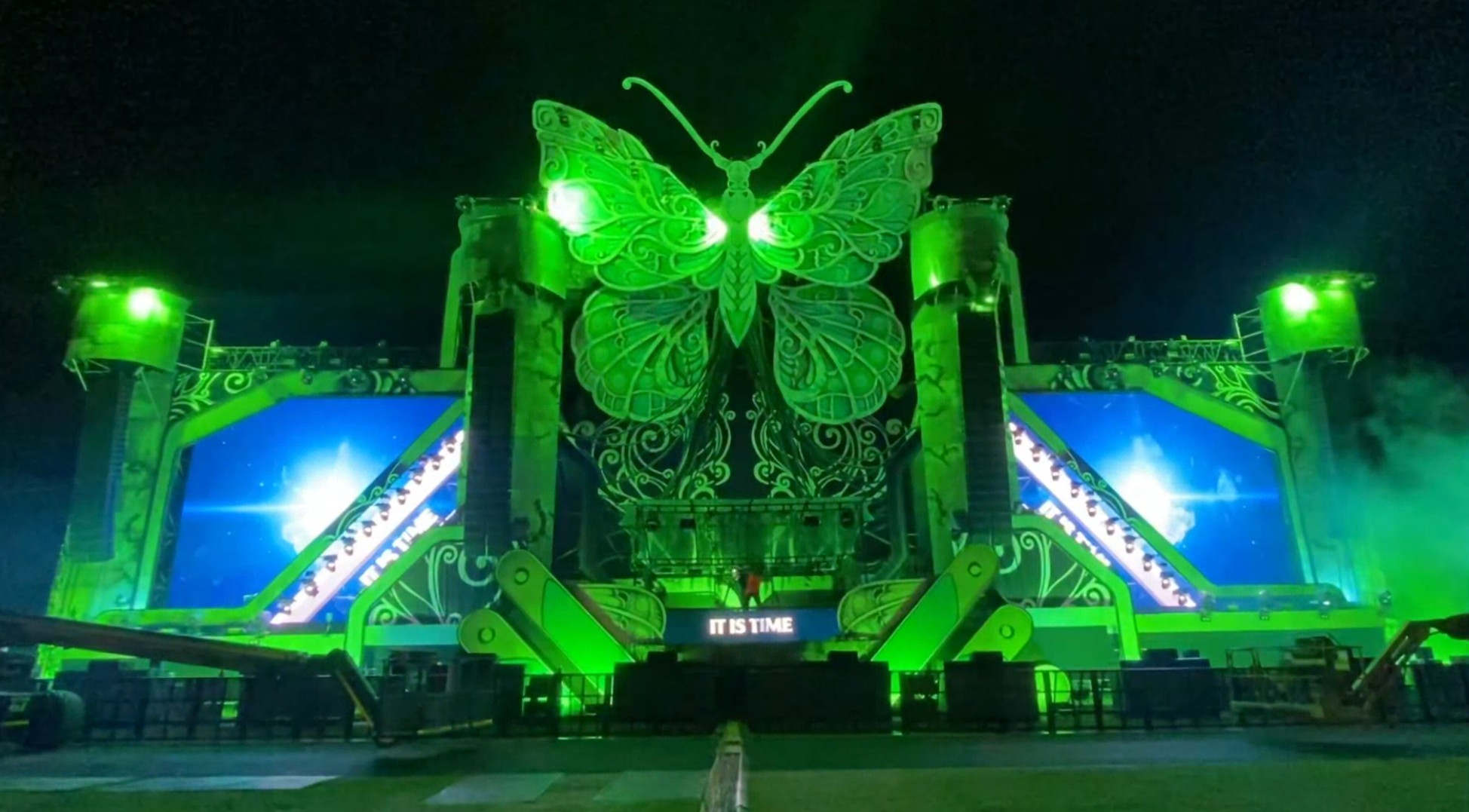
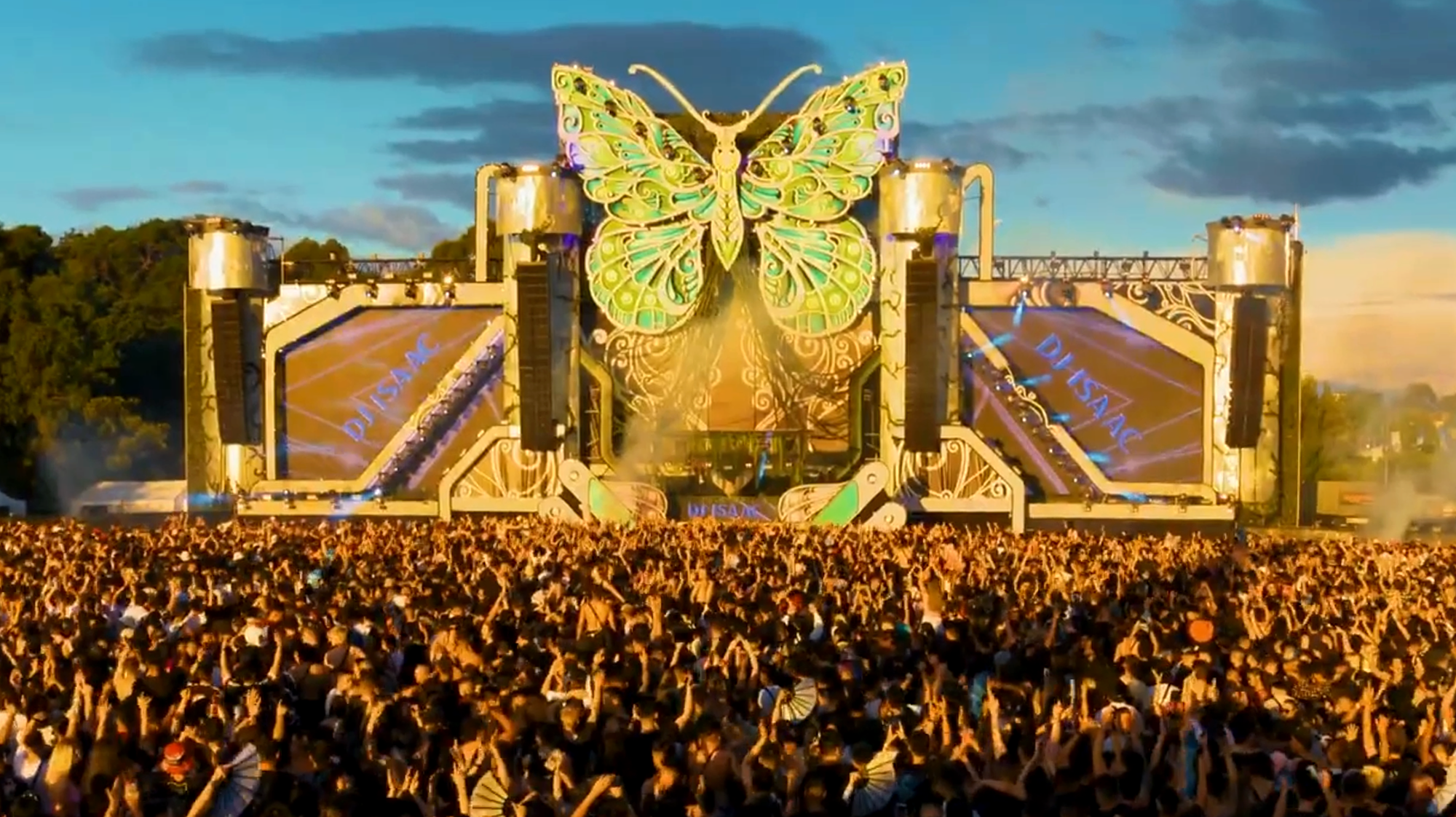
The stage began to reveal itself as a disused radioactive power plant. Four PA hangs became monumental industrial smokestacks, each finished with tiered conical flanges and I-beam needles supporting the line arrays.
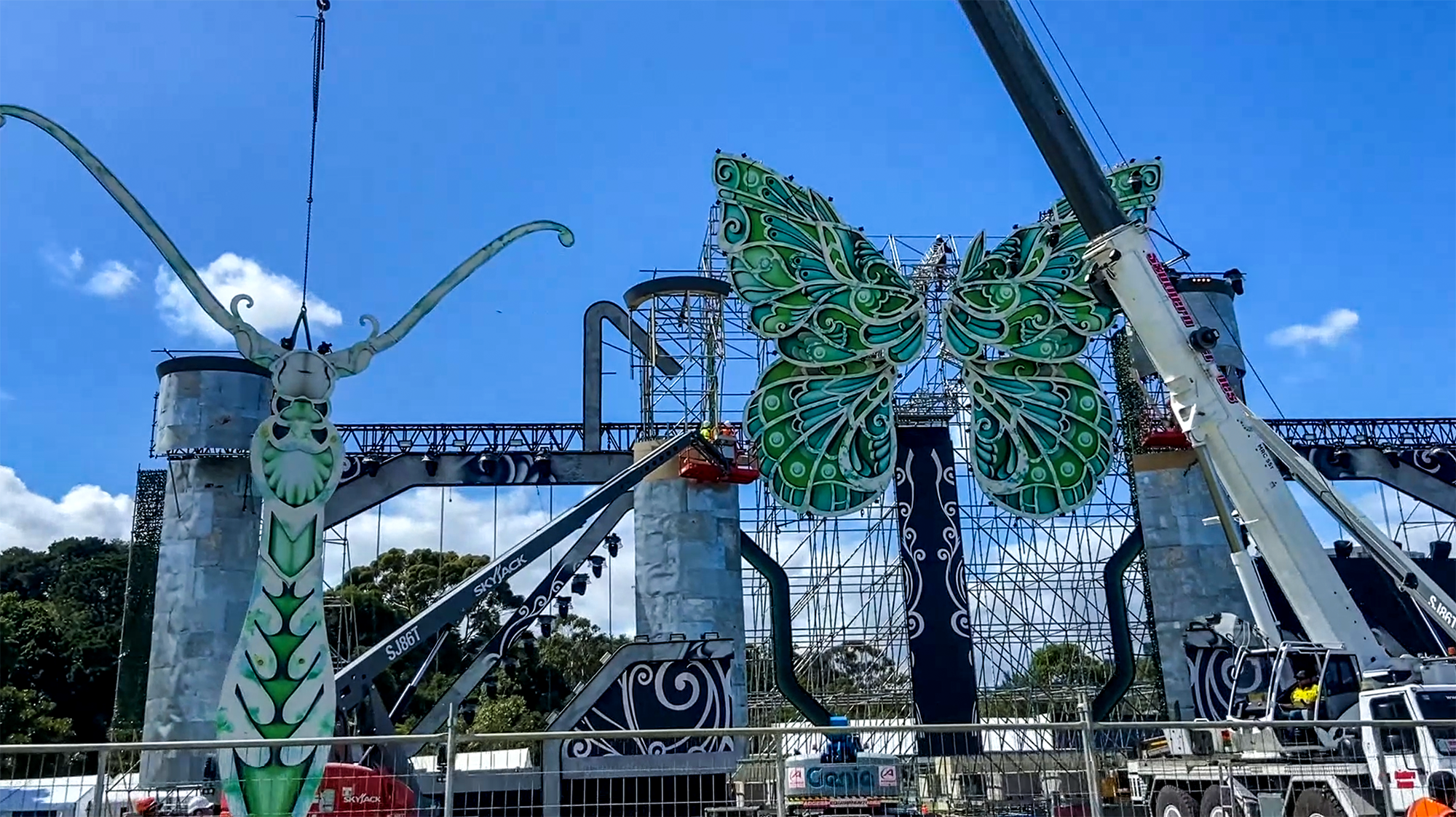
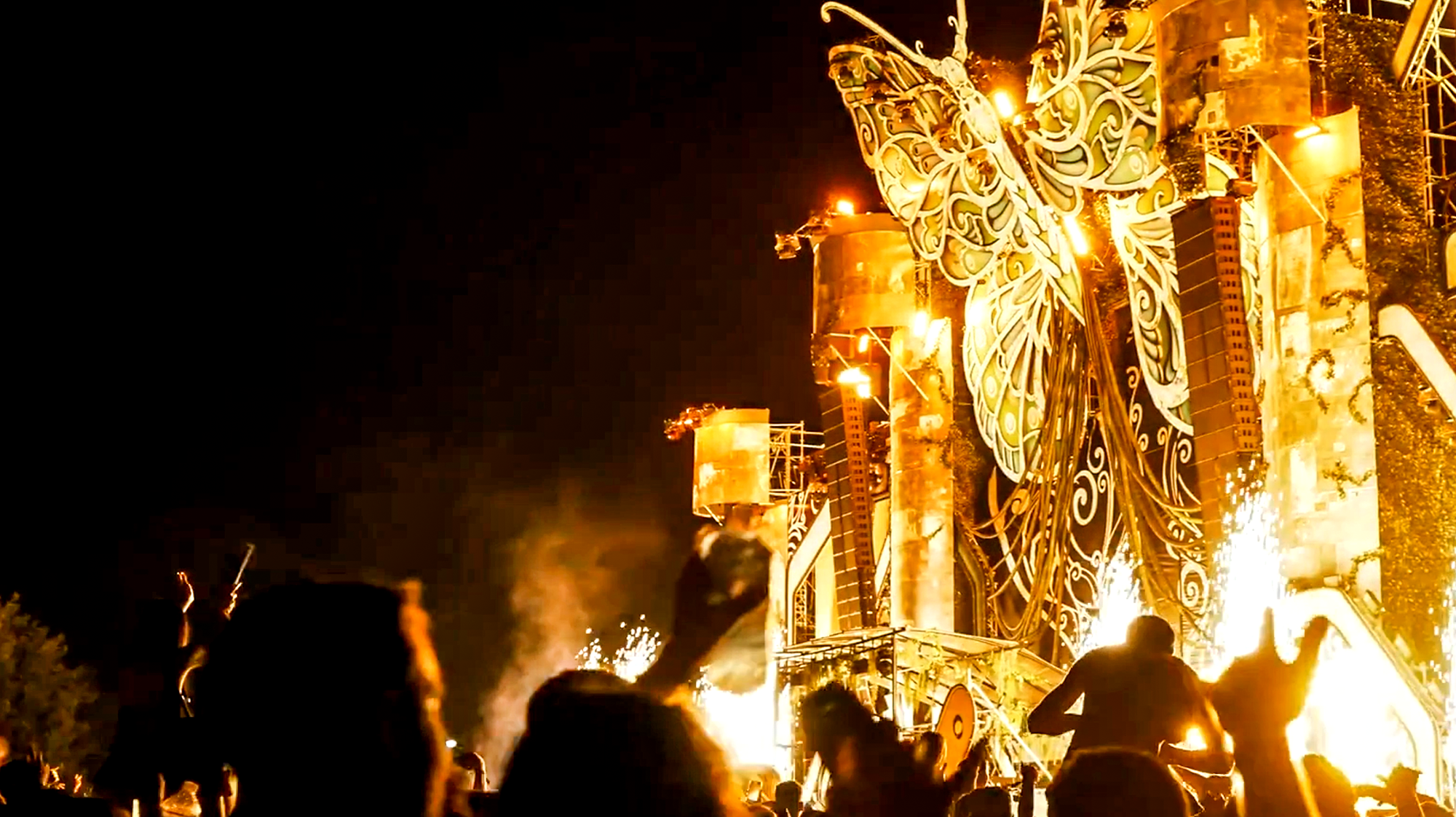
I clad the smokestacks in reused sheet metal recovered from an earlier stage build. Its creases, screw holes and weathered surfaces caught the setting sun and stage lighting beautifully, giving the architecture a history it could not have gained from new material.
Diagonal scenic forms cut through the LED wall fields like pipes, industrial routing and conveyor systems. They masked the video surfaces, created rigging positions for moving lights and connected the visual architecture across the full width of the stage.
Large agricultural drainage pipes tethered the butterfly to the industrial structure—as though restraining it, feeding radioactive energy into it or sustaining the transformation taking place.
Plants emerged through cracks in the smokestacks and surrounding set elements, suggesting an abandoned facility being slowly reclaimed by nature.
At the centre of it all was a 15-metre butterfly, mutated by the radioactive landscape and emerging from the industrial ruin.
For the three days it stood, it was the largest butterfly in Australia.
The story was not imposed from the beginning. It emerged through the materials, forms and systems already taking shape. Once I recognised it, every element became more coherent.
On site, the scale of the responsibility became physical.
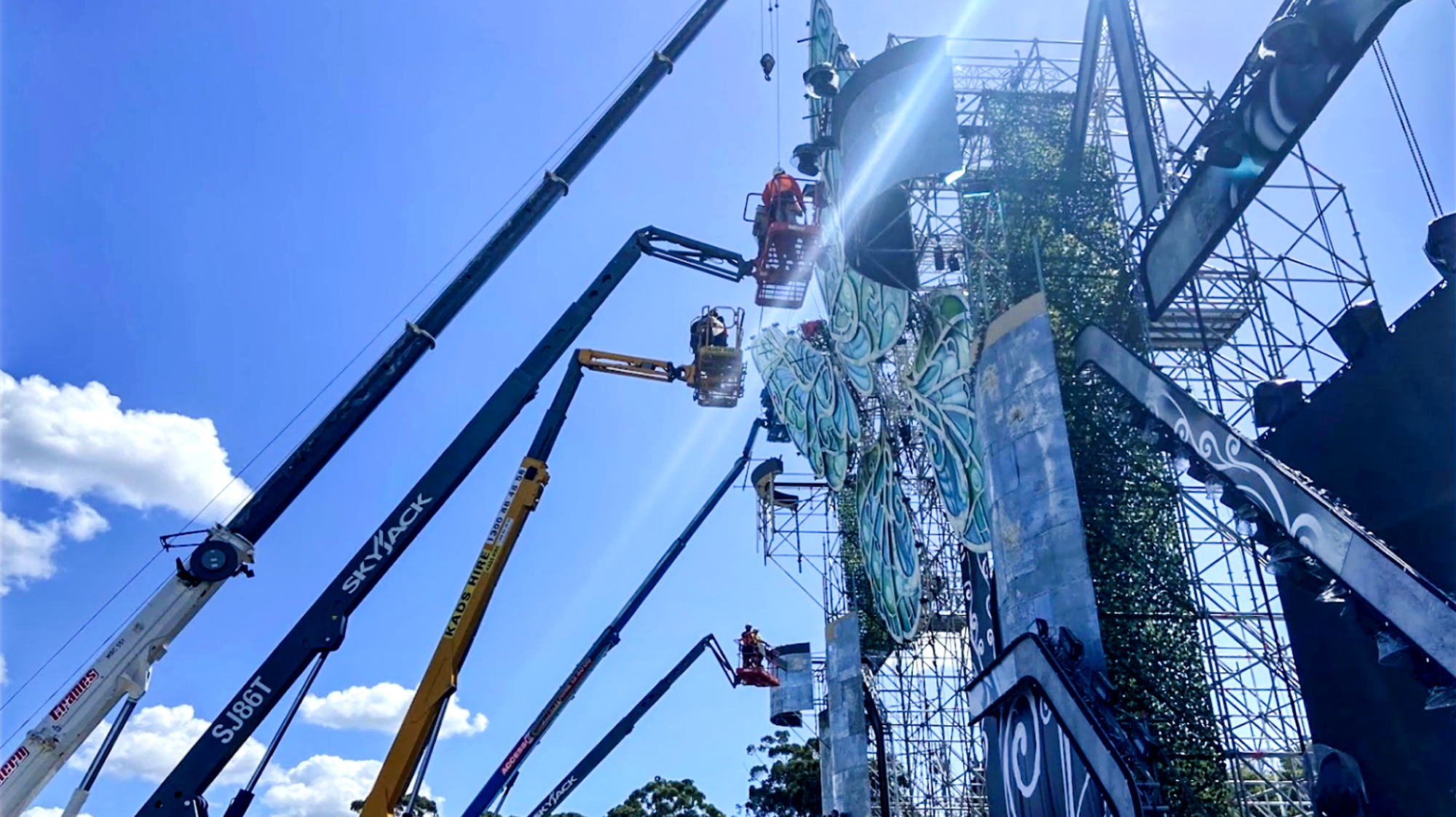
Around thirty-three people moved through the build across scaffold, rigging, carpentry, stage decoration, lighting, LED, lasers, sound and pyro. Some crew were highly experienced. Others were green.
The job required constant sequencing: where trucks landed, which components were needed next, crane placement, radius and lift sequence, when lighting required access, when banners would become unreachable and how each department could move without blocking the next.
The build was not difficult because one detail was impossible.
It was difficult because every detail depended on the timing of everything else.
I marked scaffold with tape to show landing points. I documented lift-frame connections so riggers had the information in their pockets. I established crane position and radius before call time. I redirected logistics when equipment was staged in the wrong place, solved missing-equipment problems, mentored inexperienced crew, operated machinery when nobody else held the required ticket and developed methods for tensioning the enormous scenic banners when the installed finish could not be achieved from the ground.
Leadership on Butterfly did not mean protecting my job description.
It meant protecting the project’s momentum.
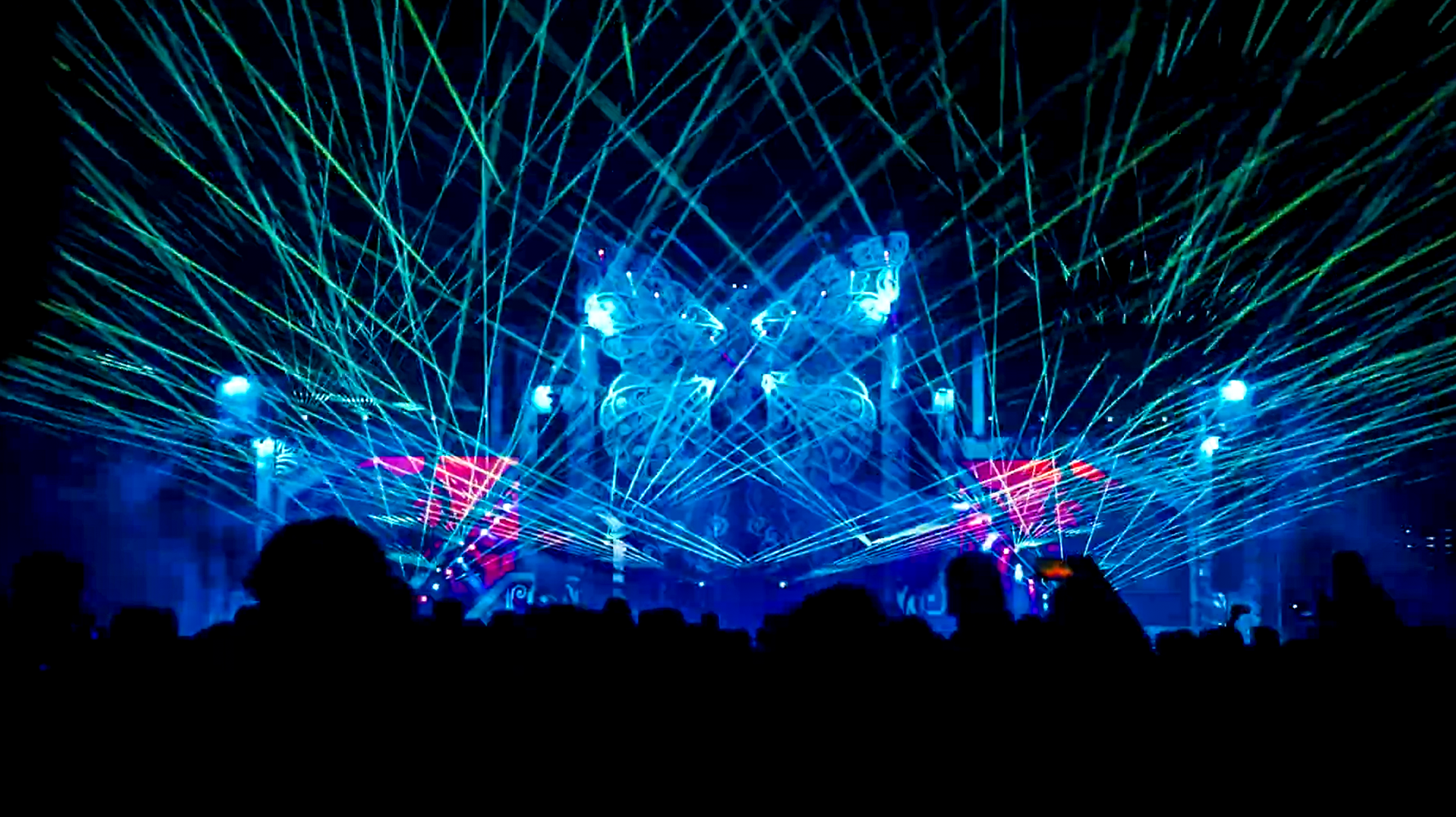
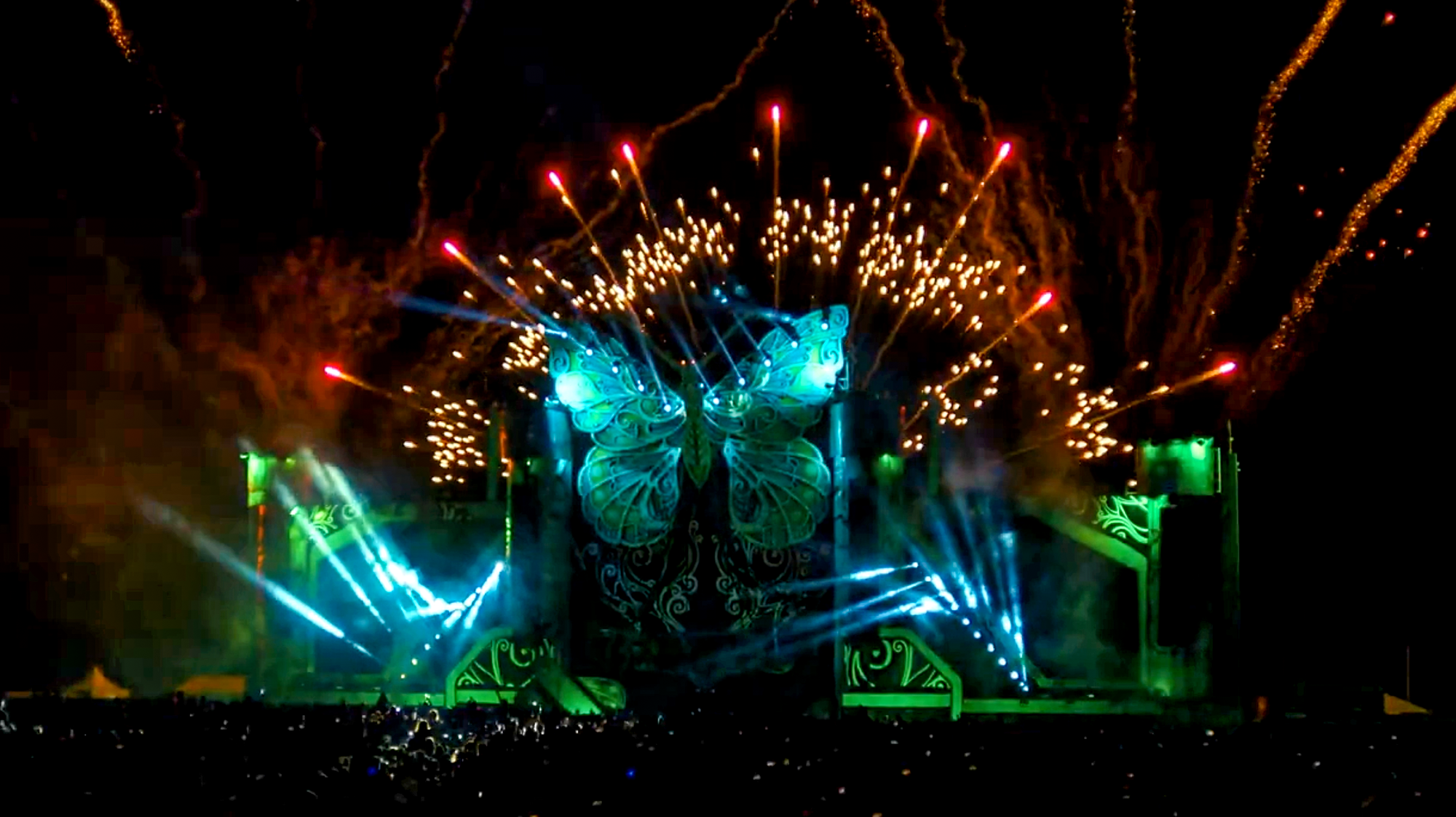
By the time the show opened, the crew who had tested me trusted me. The build had held. The systems worked. The 57-metre stage carried its scale in daylight, then transformed after dark through LED content, lighting, lasers, pyro and fireworks.
Experience Breakdown
- Led technical design and delivery for a 57 × 27 m festival stage environment.
- Translated a supplied 2D concept into a complete buildable scaffold, truss, scenic and show-system package.
- Delivered the project in approximately six weeks, including a week-long interstate installation.
- Designed scaffold structure, lift frames, truss interfaces and key installation details.
- Prepared CNC files, stage-decoration packages and printed graphic elements for fabrication.
- Directed scenic treatment and coordinated production across workshop and site.
- Developed an on-site narrative around an abandoned radioactive power plant and a mutated butterfly emerging from industrial decay.
- Integrated four PA hangs into monumental smokestack structures with tiered conical flanges and I-beam rigging needles supporting the line arrays.
- Reused weathered sheet metal from an earlier stage build, preserving its embodied energy, texture and material history.
- Used diagonal scenic structures to mask LED wall fields, create lighting positions and connect the stage through a language of pipes, conveyors and industrial routing.
- Integrated agricultural drainage pipes and planted details into the transformation narrative.
- Delivered a 15-metre butterfly—the largest butterfly in Australia for the three days it stood.
- Recruited and led approximately thirty-three people across scaffold, rigging, carpentry, stage decoration and installation.
- Coordinated crane placement, radius and lift sequence, EWP use, truck unloading, staging zones and department access.
- Integrated LED wall, lighting, lasers, sound, pyro and fireworks into the stage delivery process.
- Solved on-site rigging, access, banner-tensioning and logistics challenges under a fixed live-event deadline.
- Delivered the stage while simultaneously managing a separate major commercial build.
Why Butterfly Stage Matters
Butterfly Stage proved that I could carry the operational weight of a major live build under intense commercial pressure.
It was not about protecting authorship. It was about translating a supplied concept into a real environment, building the delivery system beneath it and keeping dozens of people moving towards the same deadline.
It also showed me that story does not always arrive before the build.
Sometimes the scaffold, materials, pipes, plants, smokestacks and butterfly reveal the world themselves. My role is to recognise that world, articulate it and allow the remaining decisions to serve it.
Sometimes story leads the build. Sometimes the build reveals the story.