The thinking behind Dragonfly
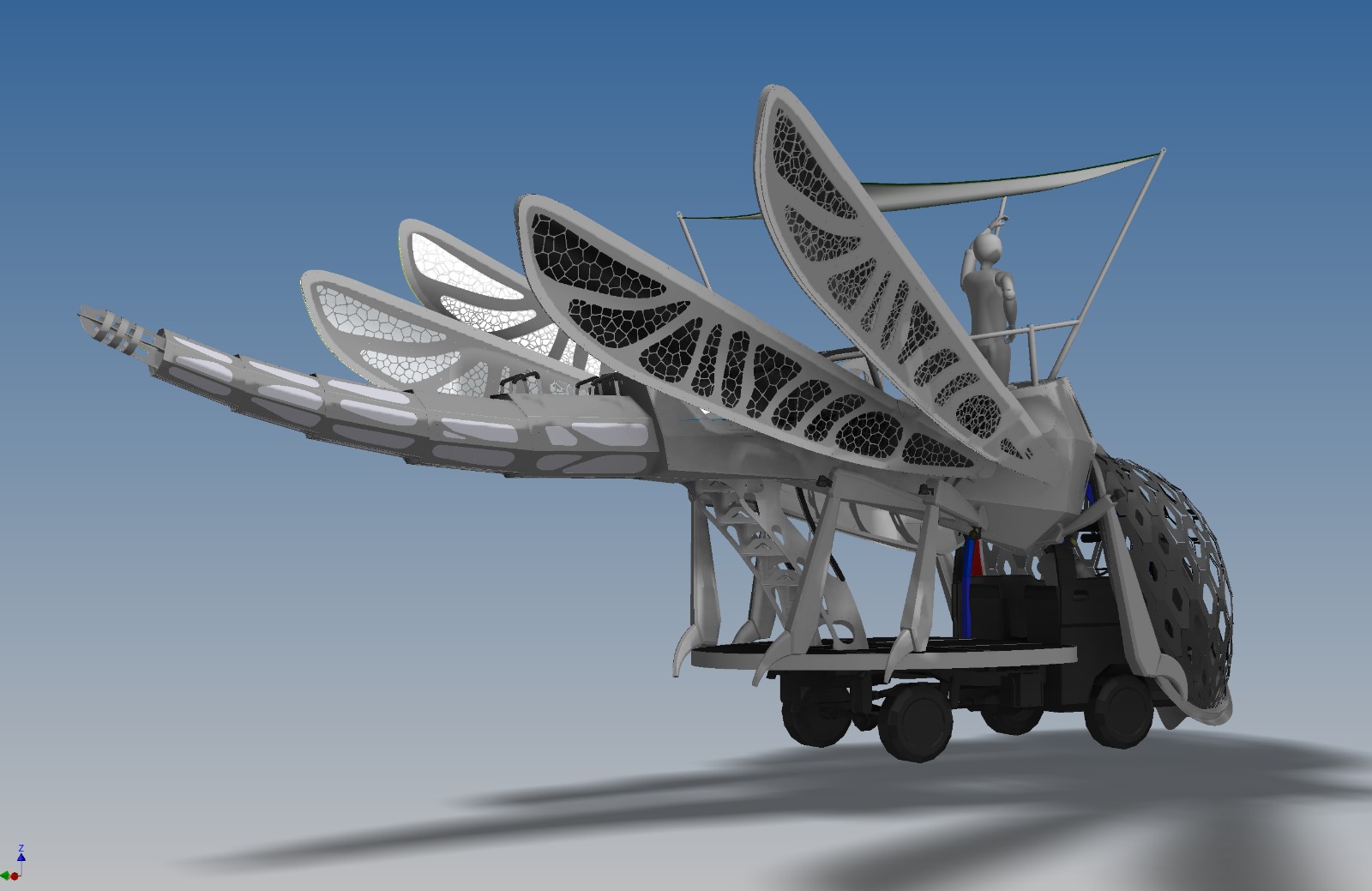
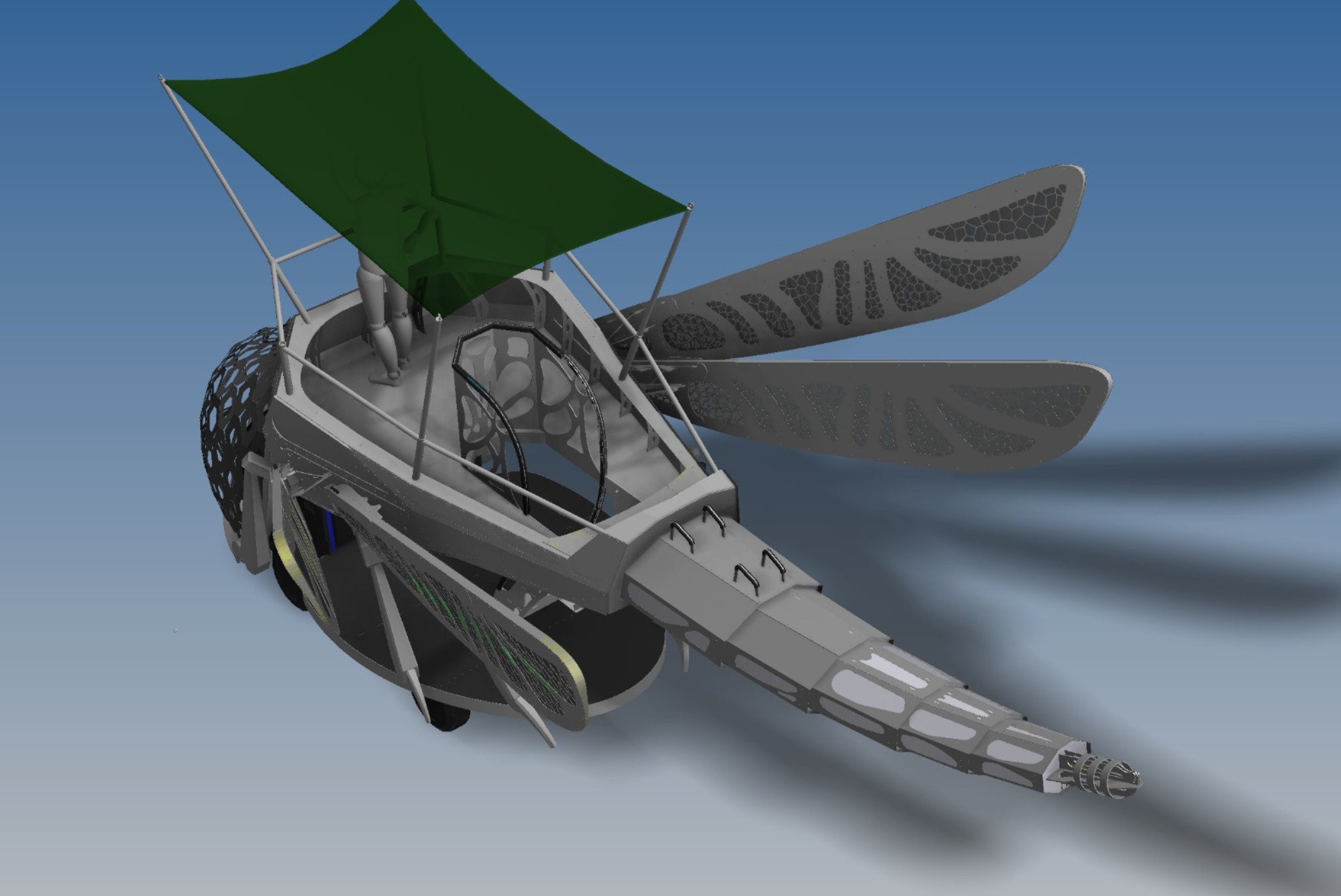
Dragonfly began as an early concept for a large interactive art car. I took responsibility for transforming it into a coherent, buildable vehicle—developing the form, structural logic, fabrication system, technical documentation and integrated lighting from concept through delivery.
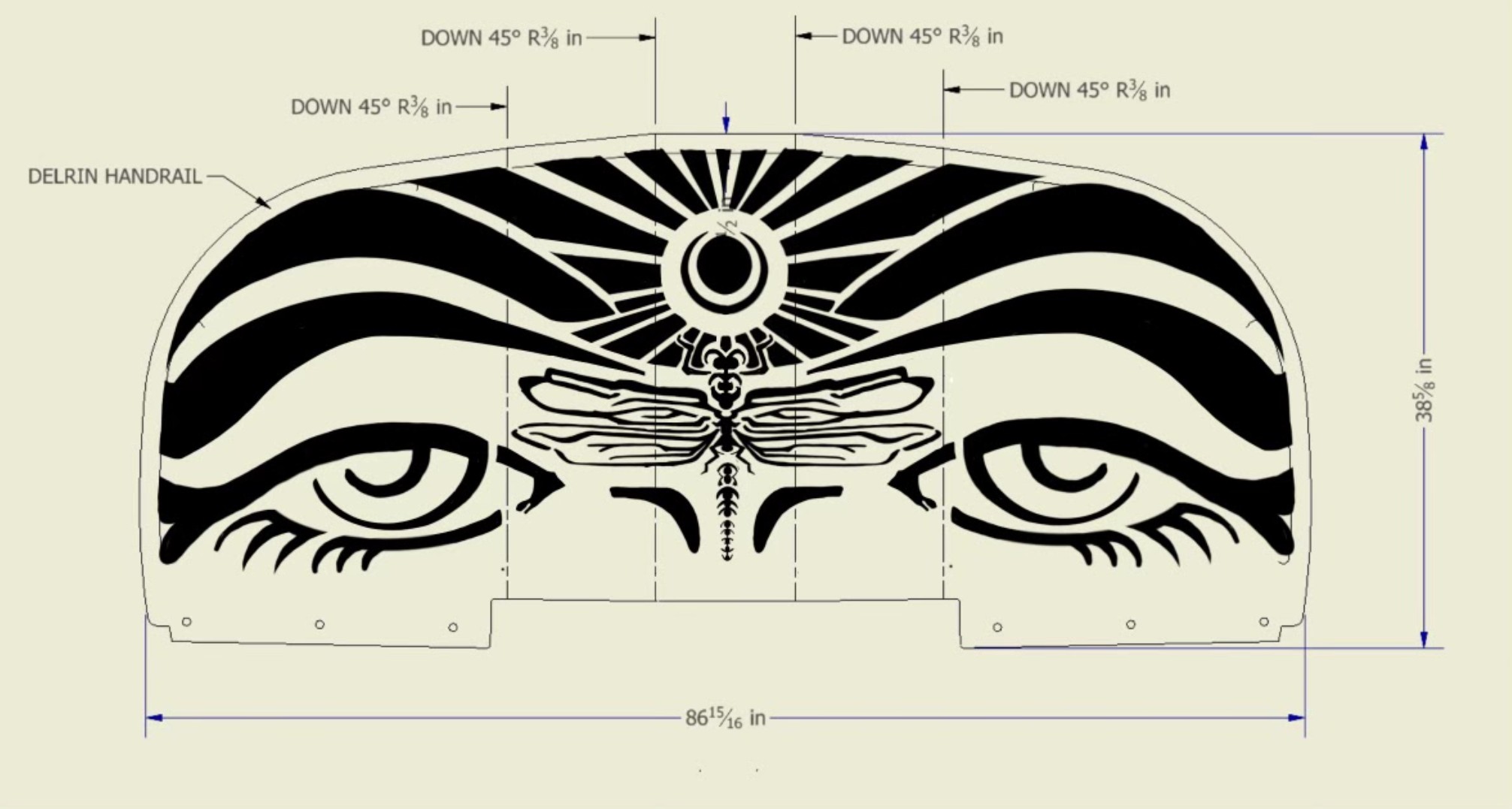
I explored the head through an extended form-finding process, testing proportion, expression, driver sightlines, structural logic, manufacturability and client response. The breakthrough came when I stopped treating the eyes as a secondary detail and made them the defining feature of the creature. Doubling their scale pulled the whole piece together, informing how the front legs and body shifted to meet them.
Following a proven process had actually limited me. The process needed to evolve to serve the idea.
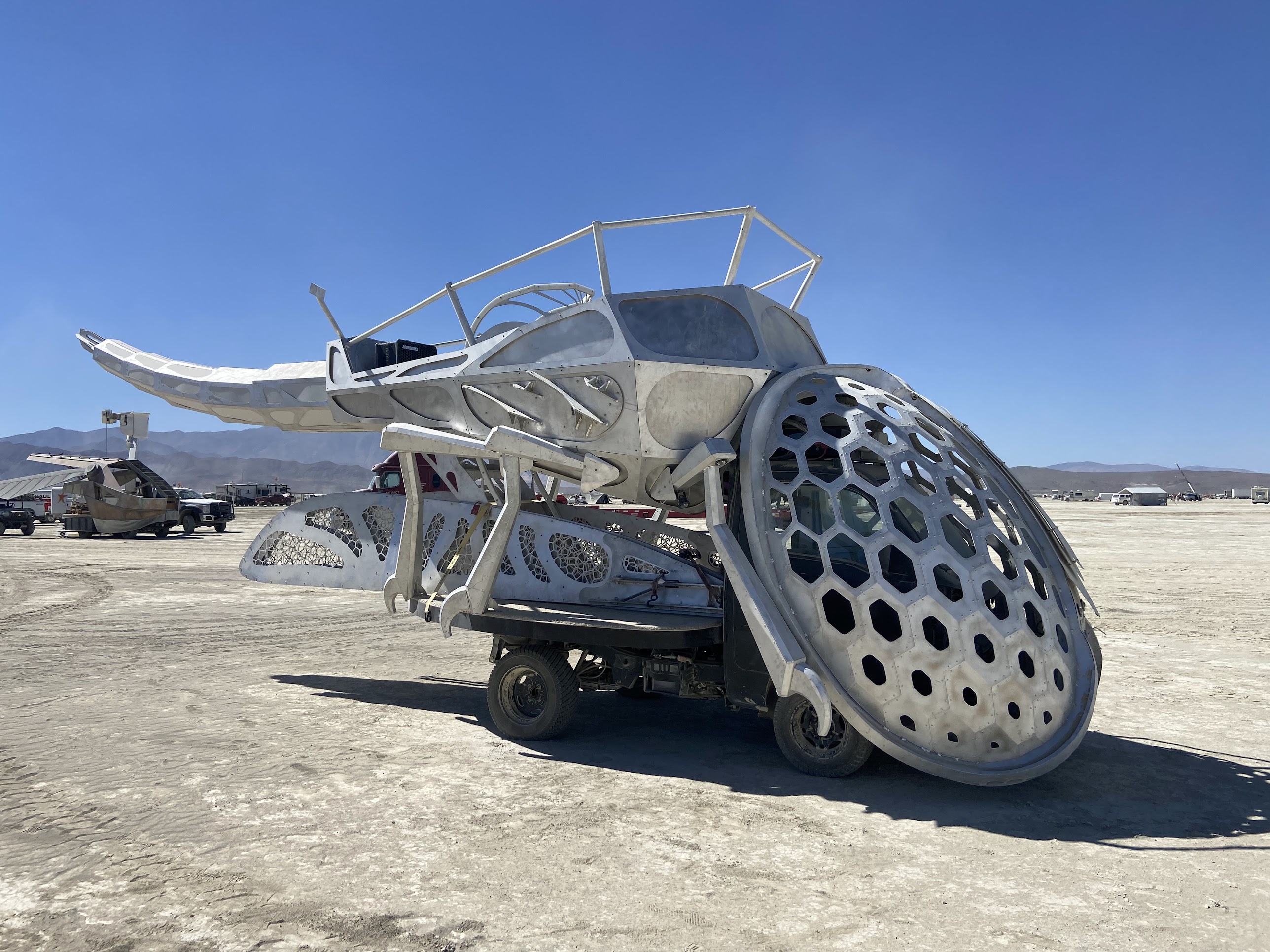
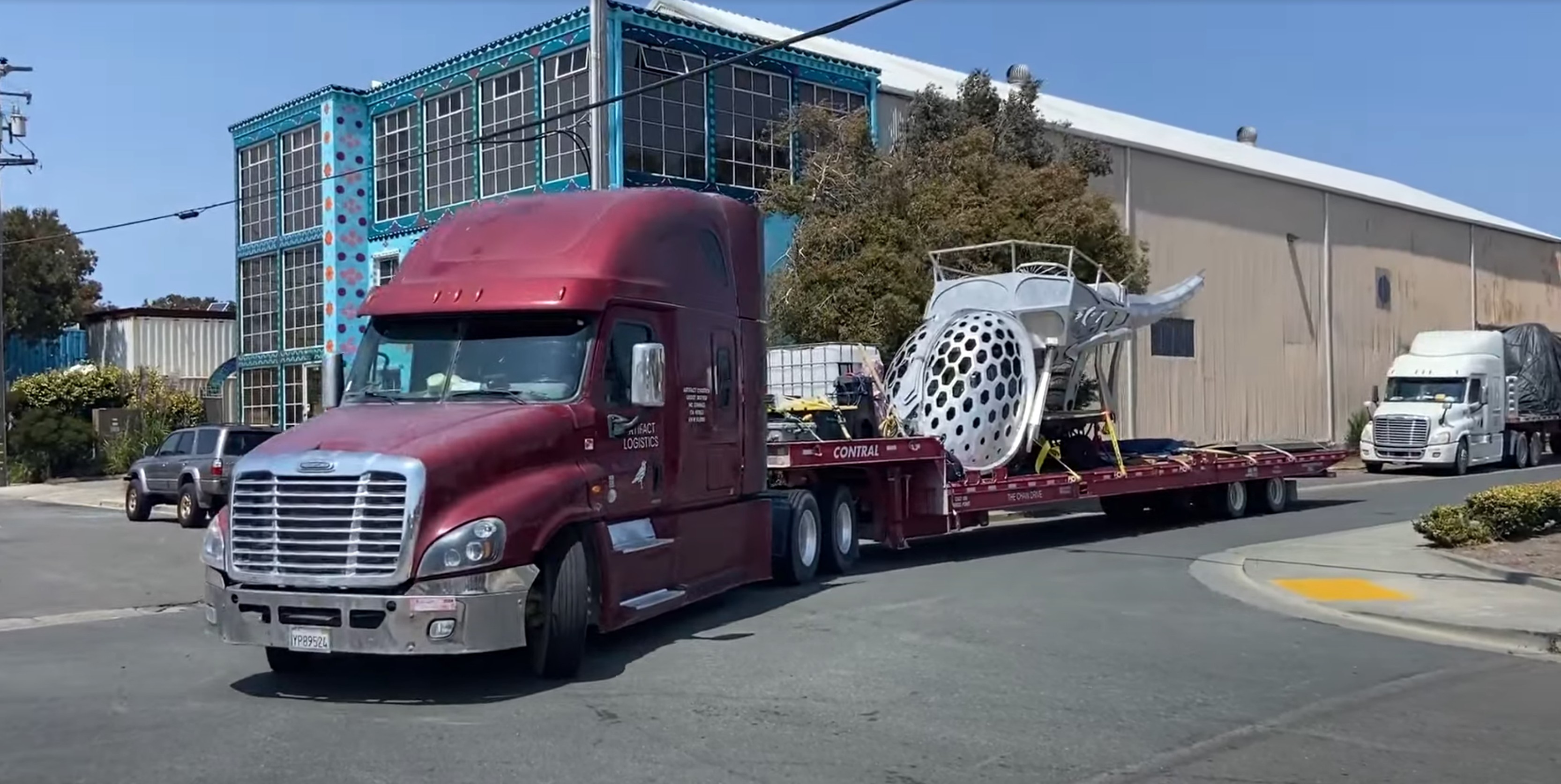
I created the compound eye forms from three key sections, lofted to mask the truck’s cab while preserving the driver’s sightlines and the overall aesthetic. I analysed and refined the loft profiles of the G2 surfaces through Curvature Analysis and Zebra Stripes, removing unwanted tension and achieving Class-A surface quality truly in the spirit of the piece.
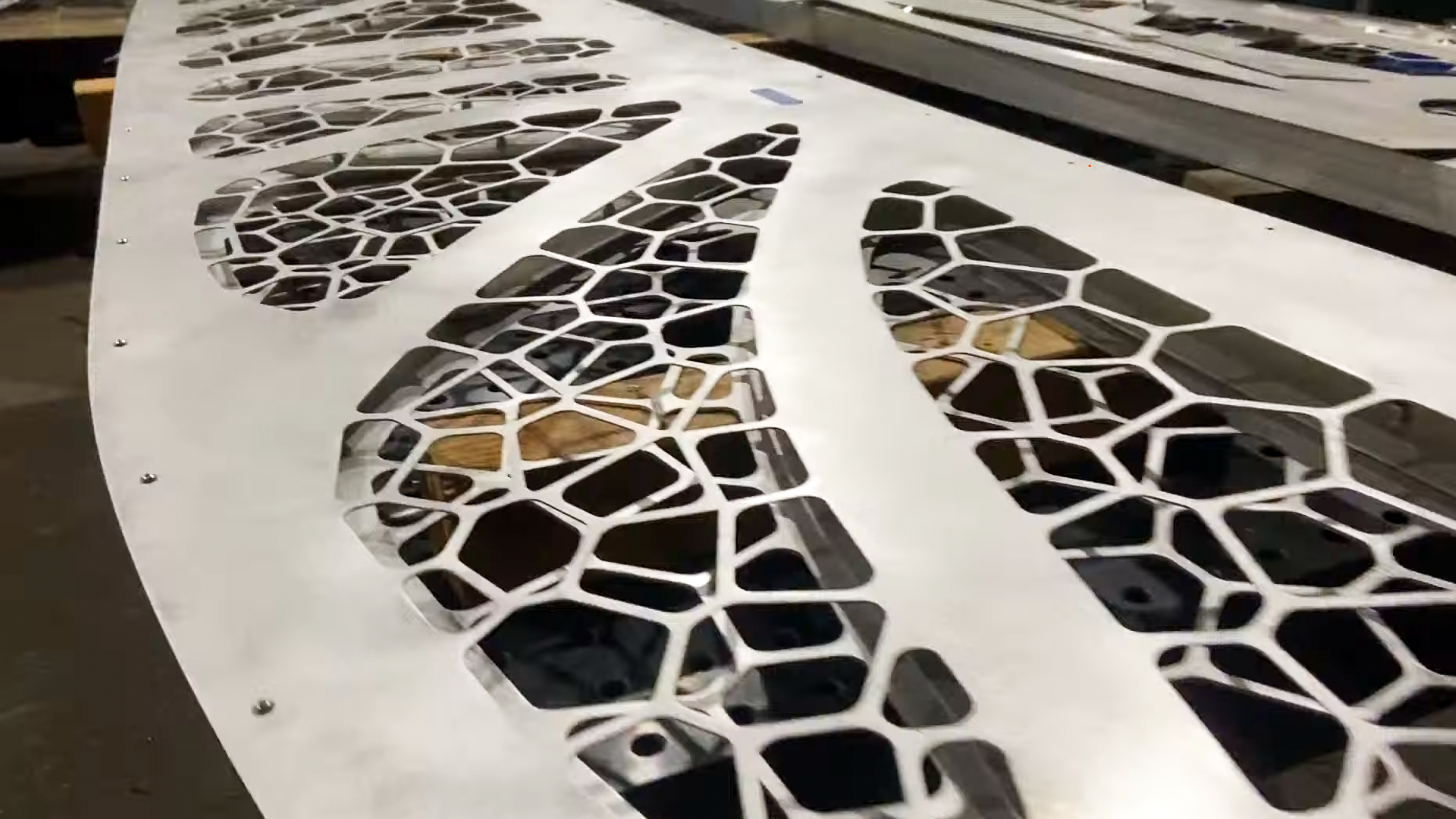
I made several attempts to resolve the irregular compound-curved surface as a tessellation of regular hexagons that could be laser-cut from flat plate. After several failed modelling strategies, I knew I had reached the limits of Inventor, so I took on the daunting task of teaching myself Grasshopper and developed a computational workflow.
During live Zoom design reviews, I tuned the model’s parameters in real time—adjusting hexagon density, attractor-driven cut-out size and radii. I gained an extraordinary degree of control and could explore endless possibilities effortlessly. The model became a live creative instrument rather than a myriad of design versions parked across a dozen layers.
When no single external specialist could resolve the complete system, I coordinated parallel development with collaborators in India and Pakistan, then combined the strongest elements of their work into one functioning computational algorithm.
The software stopped dictating the process and began serving the creative conversation.
As the eye infills approached production, I paused the process and replaced the proposed tack-welded assembly with a mechanically fastened, self-registering system.
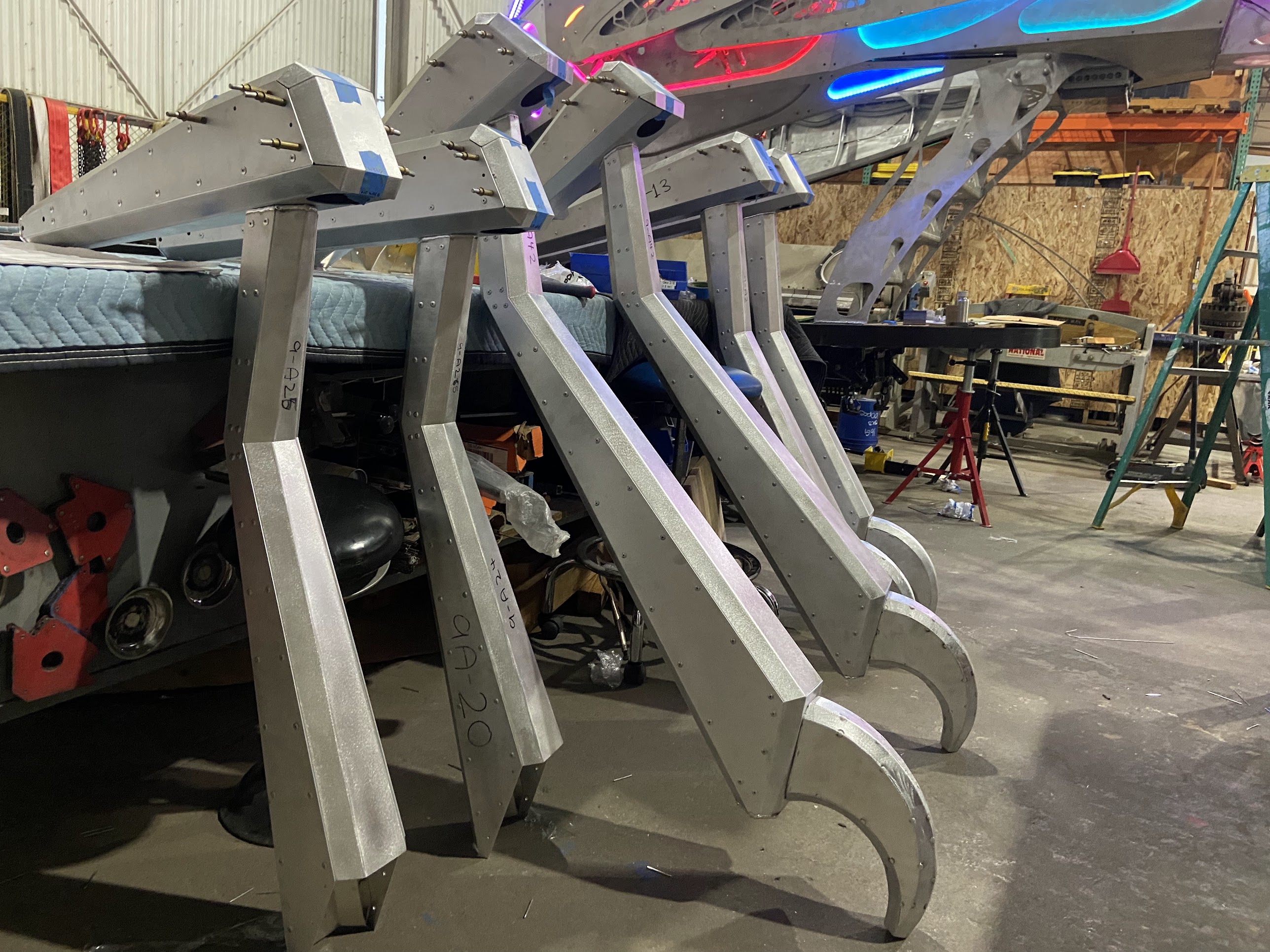
The laser-cut and folded components carried their own set-out, bend references and connection logic. This preserved the precision and finish of the geometry, eliminating time-consuming welding and unsightly exposed welds.
These were no longer simply pieces of cut and folded metal. They were high-value components carrying embedded information that allowed them to register and assemble seamlessly.
Two experienced fabricators assembled both eye infills in approximately four hours.
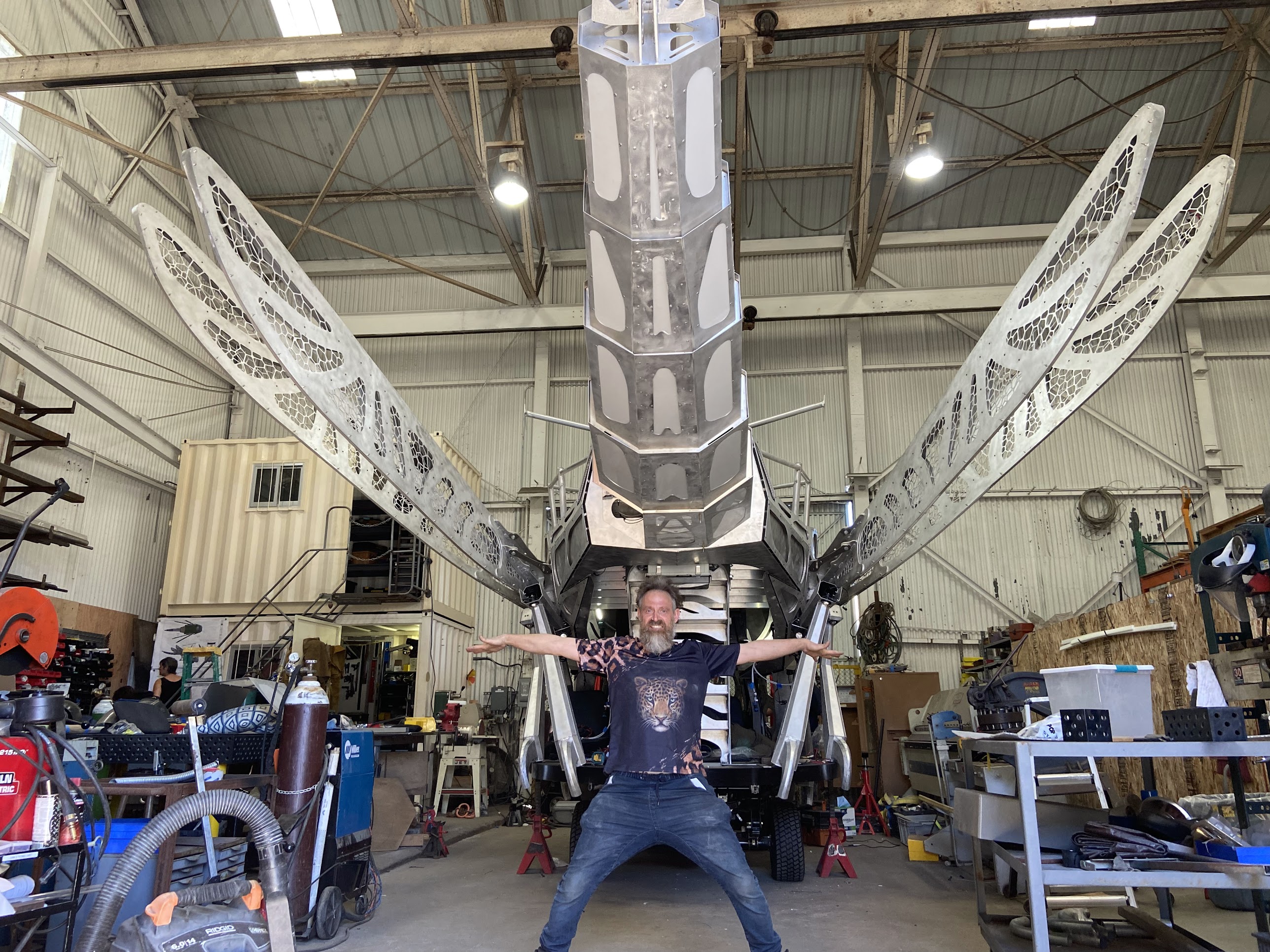
That same self-registering logic extended across almost the entire vehicle. Complex assemblies located and aligned through geometry and information embedded directly into the parts. Supported by a clear and complete drawing package, laser-cut production files, part-identification systems and screen-recorded assembly walkthroughs with narrated voiceover, the build was remarkably efficient despite the distance and time zones.
I later joined the fabrication team in San Francisco, supporting final construction and LED integration before travelling with the completed vehicle to Burning Man for installation, troubleshooting and commissioning on the playa.
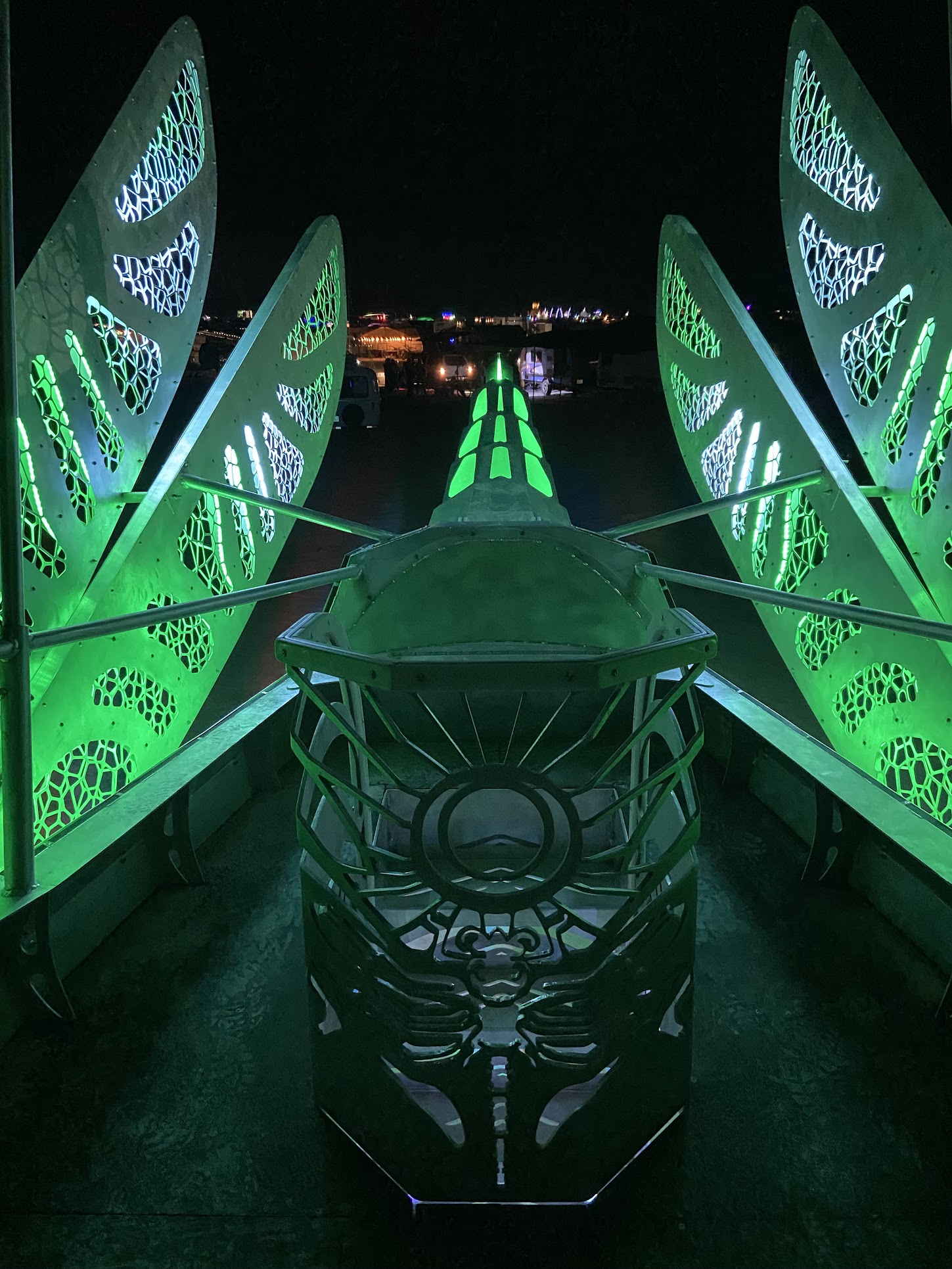
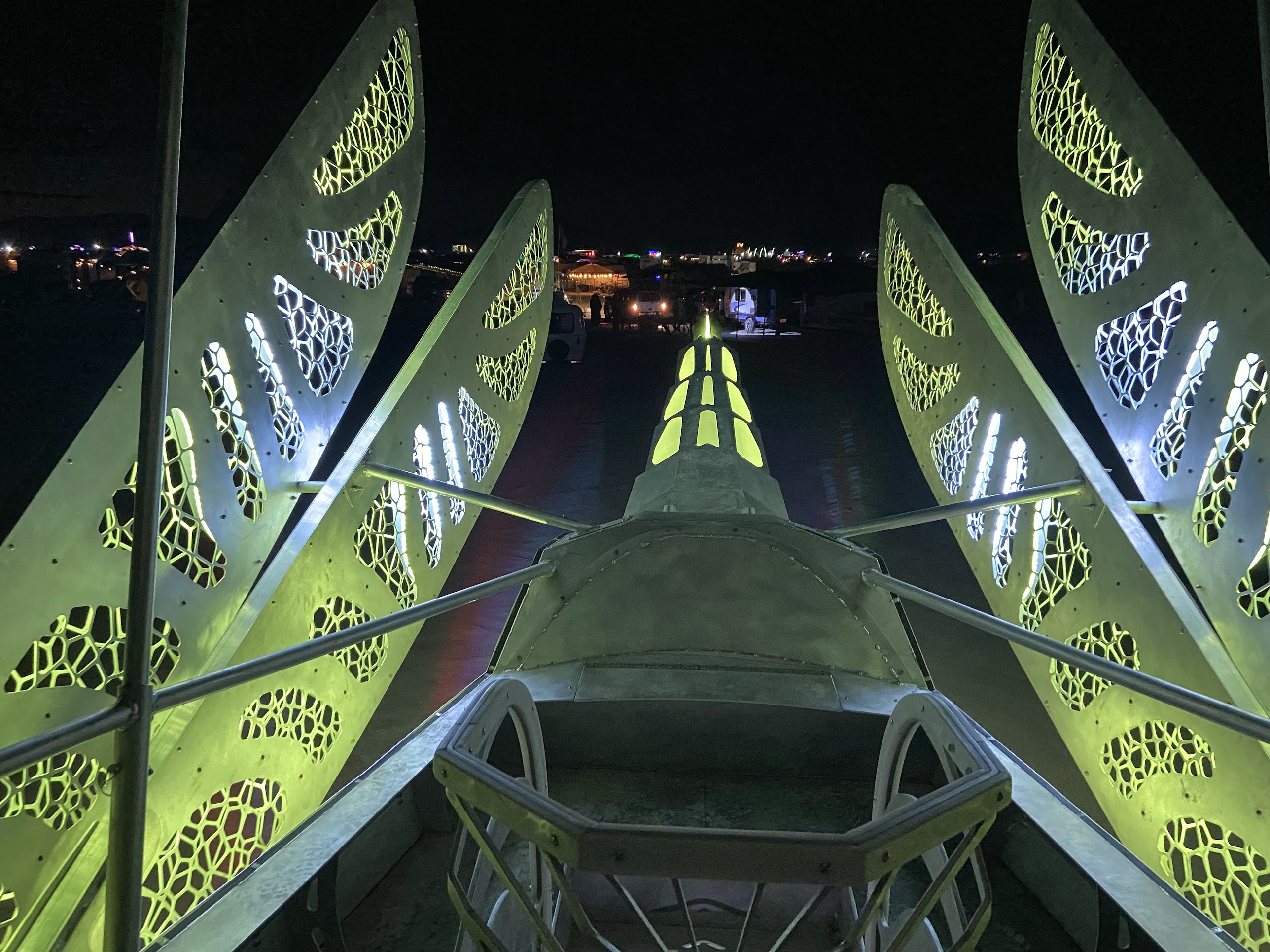
The finished work became part creature, part contraption and part moving social world—transporting a smaller operational group across the playa, then becoming a place of gathering for more than thirty people when stationary.
Experience Breakdown
- Led creative and technical design development from early concept through fabrication, installation and operation.
- Developed a ten-metre, multi-level interactive art car and moving social environment.
- Refined the head through a sustained form-finding and client-approval process, resolving character, structure and manufacturability.
- Created compound eye surfaces around the vehicle cab while preserving driver visibility and Class-A surface quality.
- Built Grasshopper systems for live parametric design review and geometric control.
- Coordinated technical development across Australia, the United States, India and Pakistan.
- Resolved the compound eye forms as faceted assemblies of flat, laser-cut and folded hexagonal panels.
- Replaced a tack-welded fabrication method with a mechanically fastened, self-registering system that improved finish and accelerated assembly.
- Designed almost the entire vehicle as self-registering assemblies that could be built directly from the parts and documentation, without a tape measure.
- Produced complete drawing sets, laser-cut production files, part-identification systems and narrated assembly walkthroughs.
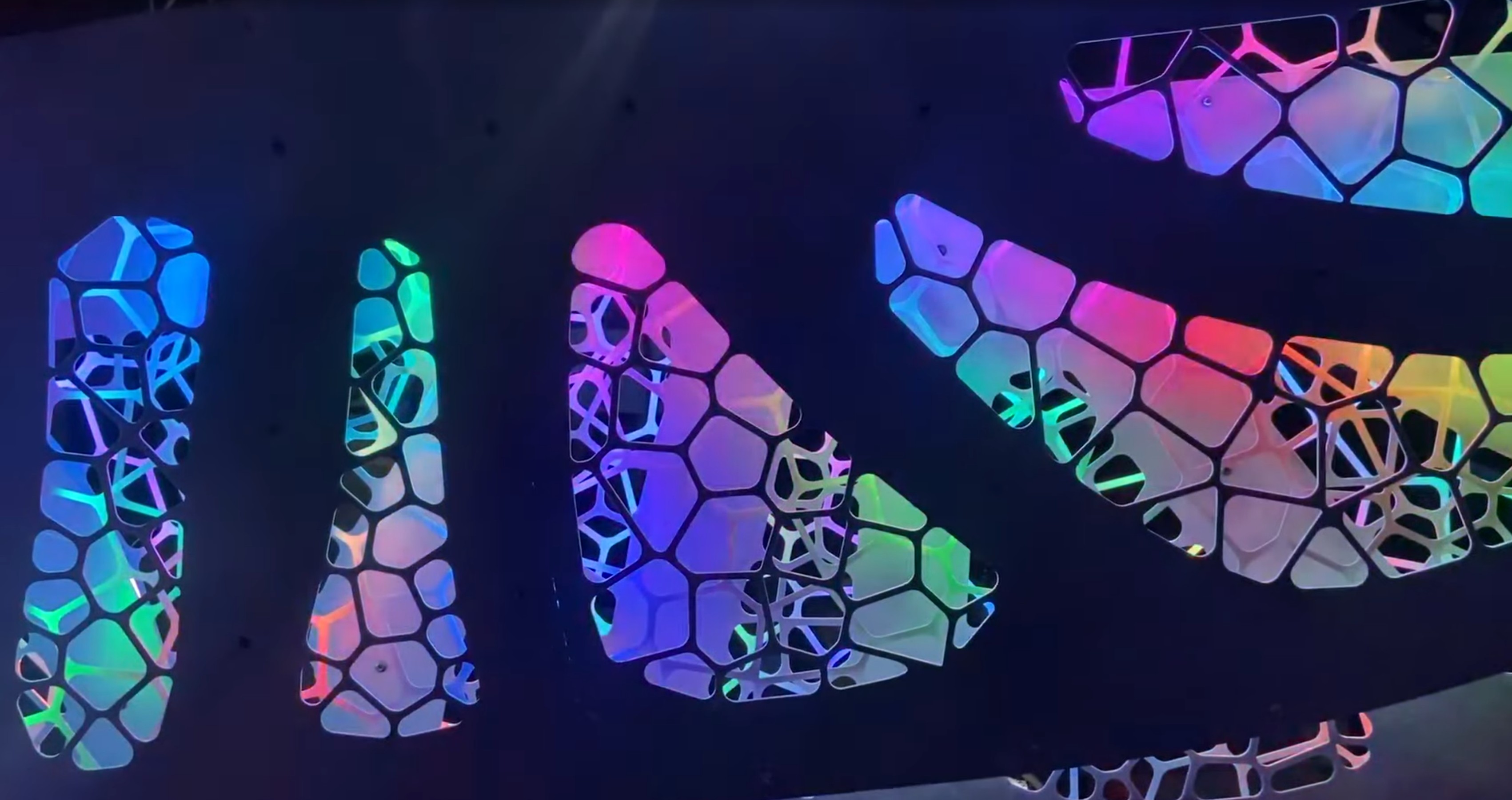
- Integrated 111 metres of LED lighting into the vehicle’s physical architecture.
- Supported final fabrication in San Francisco and installation, troubleshooting and commissioning in the Nevada desert.
Process & Technical Deep Dive
Explore the parametric design environment, fabrication strategy and production documentation developed to transform Dragonfly from an evolving concept into a fully buildable vehicle.
Why Dragonfly Matters
Dragonfly marks the point where creative development, technical design and fabrication strategy became inseparable in my practice.
Its most important lesson was not a particular software technique or construction detail. It was recognising that even a proven, disciplined process can constrain an idea—and that leadership sometimes means redesigning the process itself.
By building new design, fabrication and communication workflows, coordinating expertise across continents and leading the technical resolution from concept through commissioning, I transformed an evolving idea into a complex moving pavilion that could be fabricated, assembled and operated on the playa.
The idea comes first.
I build the systems it needs to become real.