Babylon Festival 2018
Spaceship V1
Spaceship V1 began as a psytrance festival stage, yet it now holds a different place in my body of work.
It was the first visible expression of a design language I would return to again and again: cinematic machines, strange vehicles, spacecraft, UFOs and large-scale built objects that feel as though they have arrived from another world.
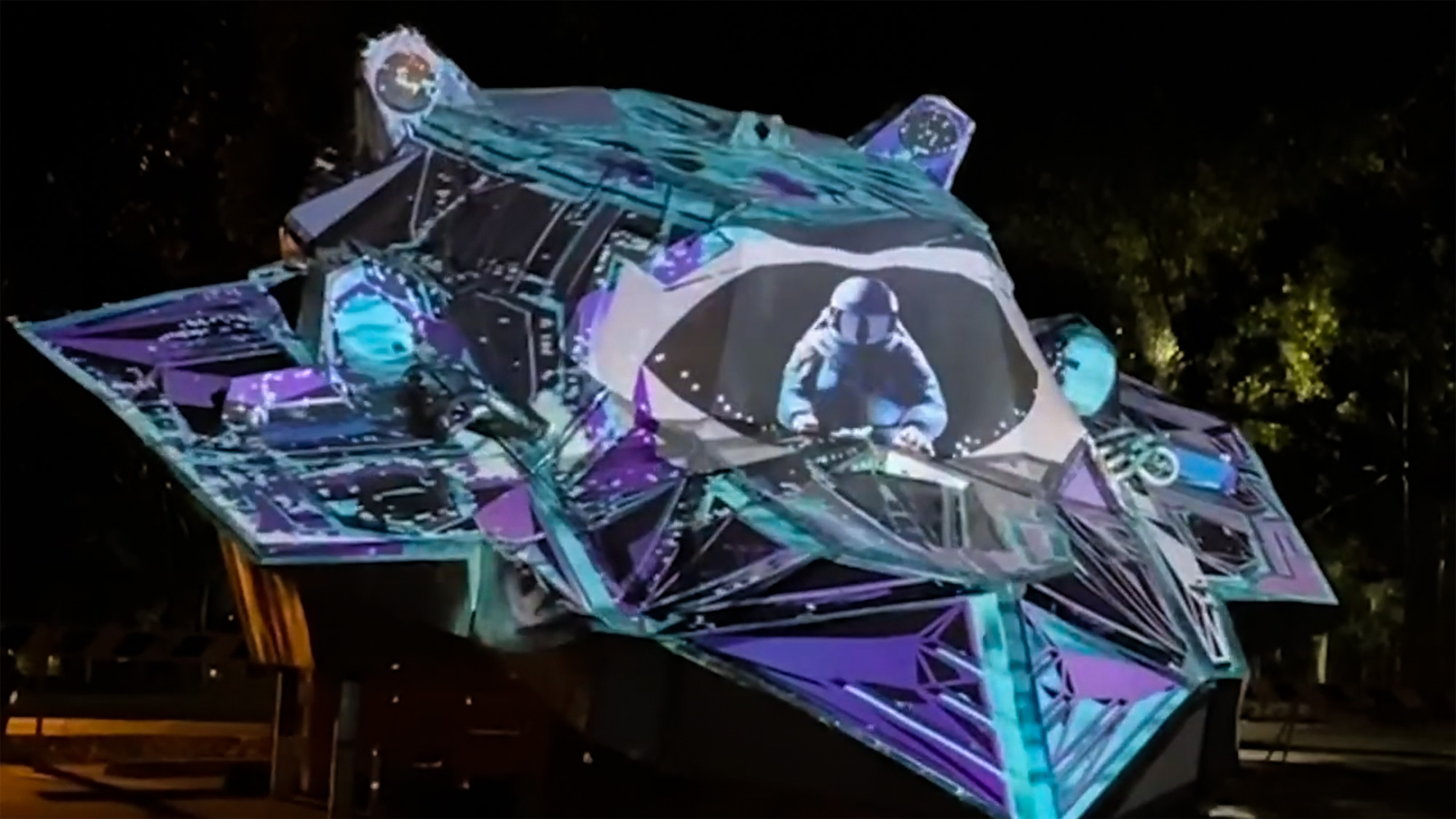
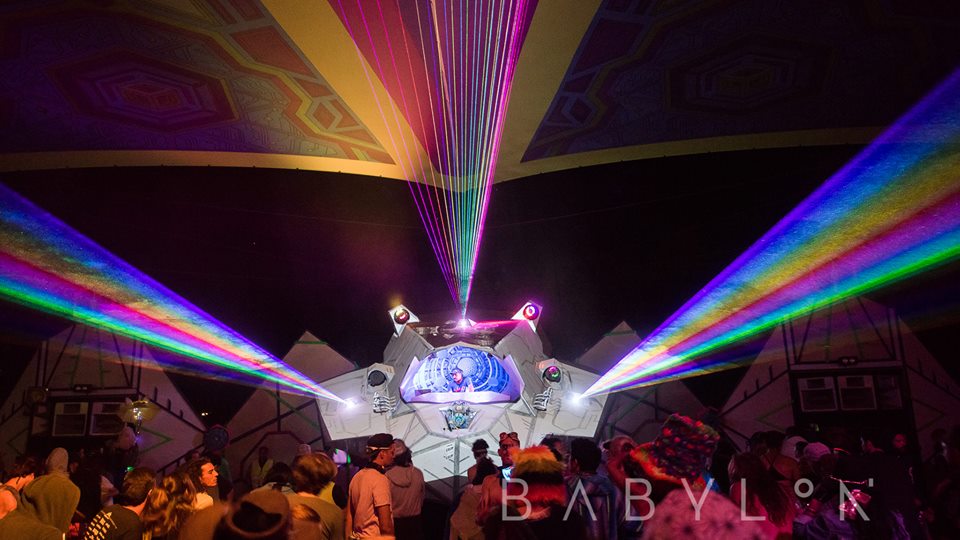
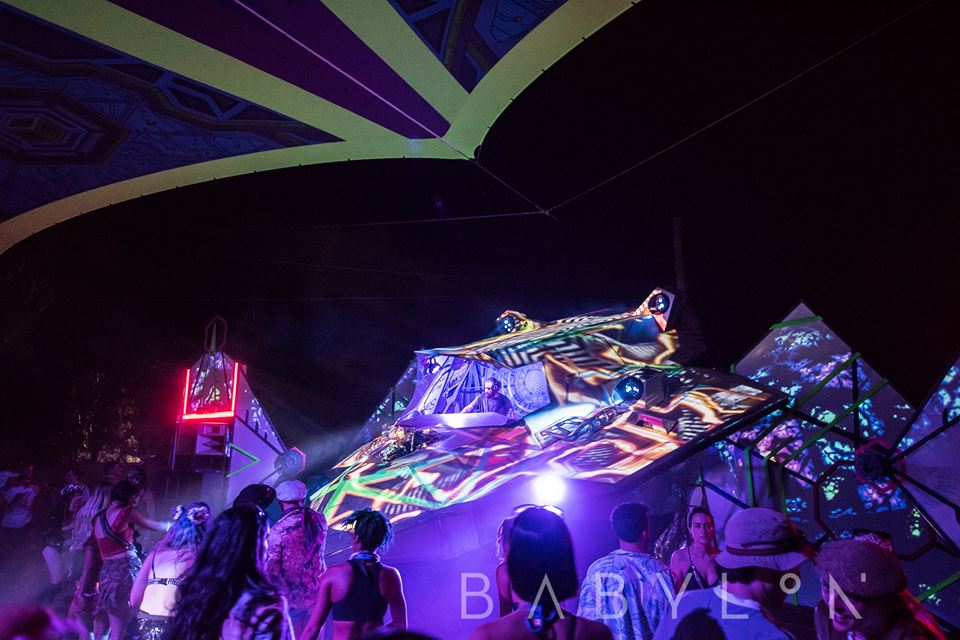
The stage centred on a hovering UFO and a pursuing spacecraft, locked into a live dialogue of projection, lasers, lighting and fire. By day, the forms read as sculptural objects in the landscape. After dark, they transformed into a reactive audiovisual environment for the dancefloor.
At the time, I saw it as a festival stage.
Looking back, I see the beginning of a lineage.
The instincts developed here later carried into film work: translating speculative forms into buildable objects, giving complex geometry clear assembly logic and using light, projection and structure to make a machine feel alive.
Spaceship V1 was not yet the full technical maturity of the later film spaceships. It was rougher, freer and festival-born. That is part of its value.
It was the first time a spaceship became more than an image in my practice. It became a built environment: a hovering UFO suspended above the dancefloor and a grounded spacecraft people could move around and experience at close range, while DJs and performers activated the structures from within.
The project brought together the elements that would continue through the later spaceship work:
- Cinematic form.
- Real-world fabrication.
- Projection-mapped surfaces.
- Lasers and fire.
- Spatial storytelling.
- The transformation of a dancefloor into a shared moment of immersion and transformation.
It was the first doorway into a professional identity I would claim just one year later:
I make spaceships real.
Experience Breakdown
- Led creative and technical delivery for an immersive stage environment at Babylon Festival 2018.
- Designed a narrative-driven environment built around a hovering UFO and pursuing spacecraft.
- Developed the spaceship forms as projection-mapped surfaces and reactive storytelling canvases.
- Integrated stage decoration, projection content, lighting, lasers and fire effects into a cohesive night-time environment.
- Directed the transition from daylight sculpture into an immersive audiovisual world after dark.
- Delivered DMX-controlled effects synchronised with music, performance and visual content.
- Created an environment that operated as monumental scenic architecture and an immersive dancefloor world.
- Integrated performance spaces within the spacecraft for DJs and live performers.
- Established the first visible work in a spaceship design lineage that later included Marvel, The Fall Guy and Spaceballs.
Why Spaceship V1 Matters
Spaceship V1 matters because it marks the beginning of a thread that has continued throughout my career.
What started as a festival-stage language later became a film-design language: spacecraft, UFOs and cinematic machines translated into physical systems that crews could build and audiences could believe.
It showed me that a spaceship is not simply an object. It is a signal that the world has changed.
Spaceship V1 was the first doorway. The later ships proved it was a language.


From Festival Worlds to Film Worlds
I Make Spaceships Real.
Spaceship V1 was the first. What began as a festival-built spacecraft became a thread through my work: imagined vehicles, machines and environments translated from design intent into physical reality.
That thread eventually carried me onto feature-film sound stages. Thor: Love and Thunder was my first movie spaceship. The Fall Guy followed. Then Spaceballs: The New One.
The scale changed. The construction systems became more sophisticated. The crews became much larger.
The underlying job stayed remarkably familiar:
Take the spaceship they hand me and work out how to make it real.
Spaceballs: The New One
I can speak to what I did and delivered on this project without touching the story or anything still under wraps.
I got the call asking if I was available for something big. Spaceballs became the most fun job I have ever had, while firmly extending my understanding of the scale I can deliver.
At its largest, I was leading the technical design and delivery across two hero sets in the multi-million-dollar range, with up to 90 trades operating simultaneously at peak production. My role sat between design intent and physical construction: developing construction methodology, breaking complex forms into manufacturable components, and keeping an enormous volume of work moving toward camera-ready.
If there were no parts on the sound stage floor, the machine stopped.
That did not happen.
I worked sustained overtime to stay ahead of production and keep parts flowing to the crews who needed them. On a construction crew of more than 100 people, I was the only person pre-authorised to undertake unscheduled overtime. In an industry where production hours and bookkeeping are tightly controlled, that level of autonomy meant something: I was trusted to do what was necessary to keep the machine running.
It cost me, and I fucking delivered.
On the largest build, approximately 10,000 individually nested and numbered parts passed through my desk. Construction methodology, part numbering and assembly drawings turned an enormously complicated spacecraft into what I had coined more than a decade earlier as “Adult IKEA.”
Every piece had a place. Every piece had a number.
The crew could build from it.
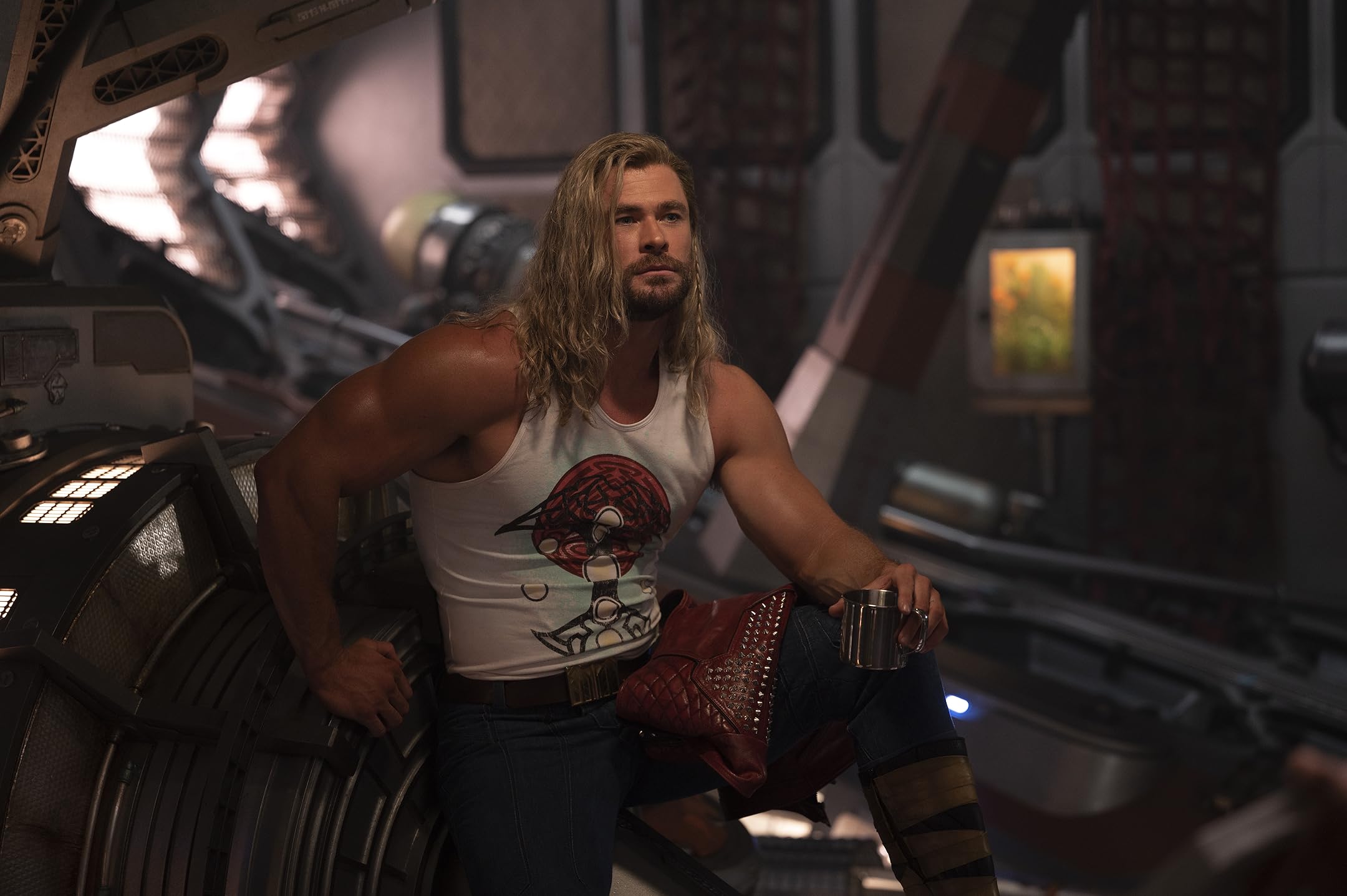
Thor: Love and Thunder
This was my first feature-film spaceship.
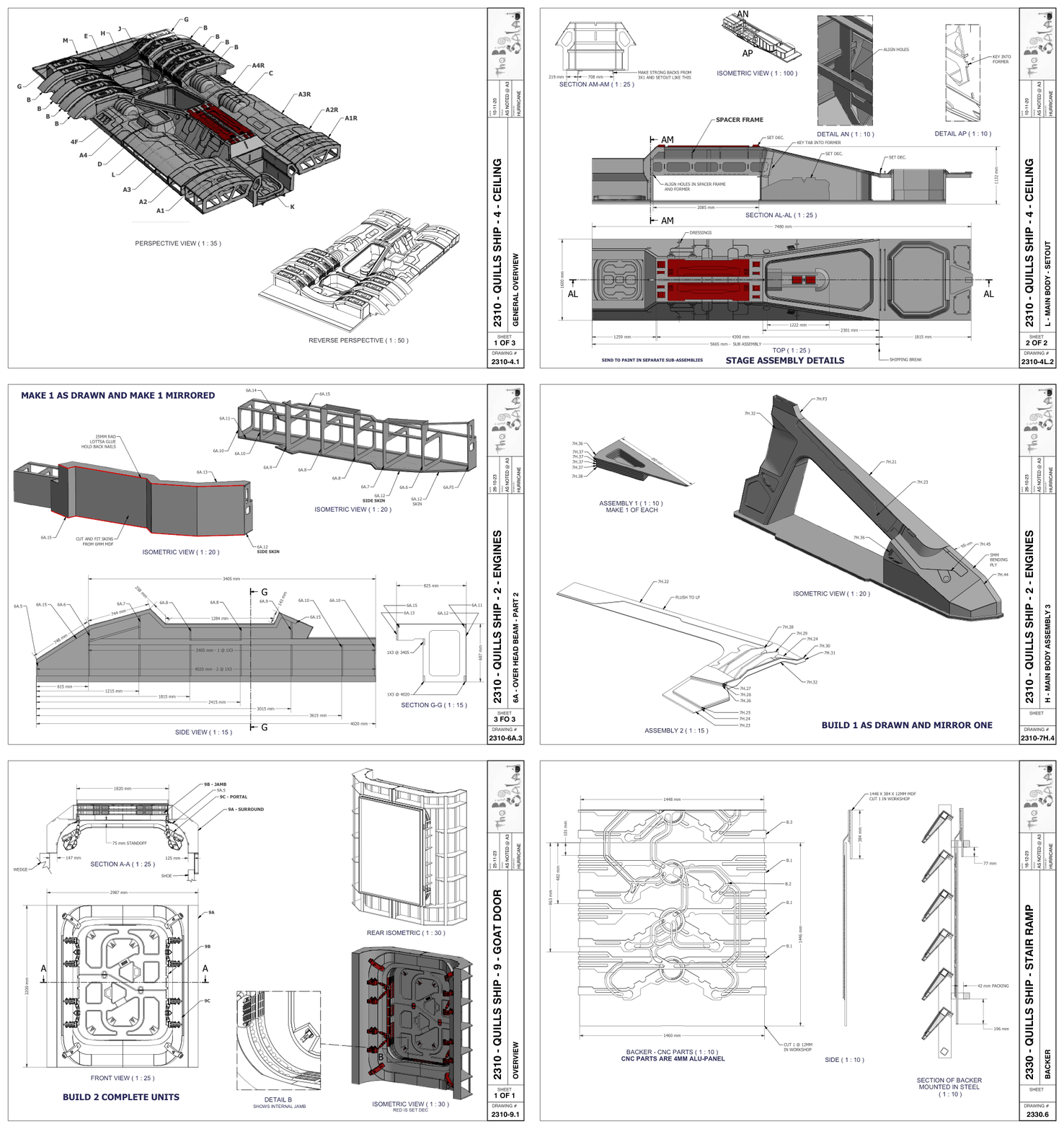
I received the production design model and spent roughly 500 hours over ten weeks translating it into something that could actually be built. With the exception of the supplied cockpit, every fabricated part visible in this spacecraft passed through my computer.
My drawings fed a team of approximately 11 carpenters over 11 weeks. The ship was fabricated concurrently across multiple construction workshops, scenic and the sound stage, with separate assemblies eventually brought together and registered into a single finished set.
That was the extraordinary part for me.
I had spent ten weeks living inside this thing digitally, endlessly zooming through its geometry and resolving it piece by piece. Then I walked onto the sound stage, climbed the gangways around those enormous engine housings, and suddenly I was standing inside the thing I had been looking at on a screen.
Everything had been built separately.
Everything came together.
Like LEGO at the scale of a movie set.
Want to know more? - Here’s a rabbit hole 🕳️🐇
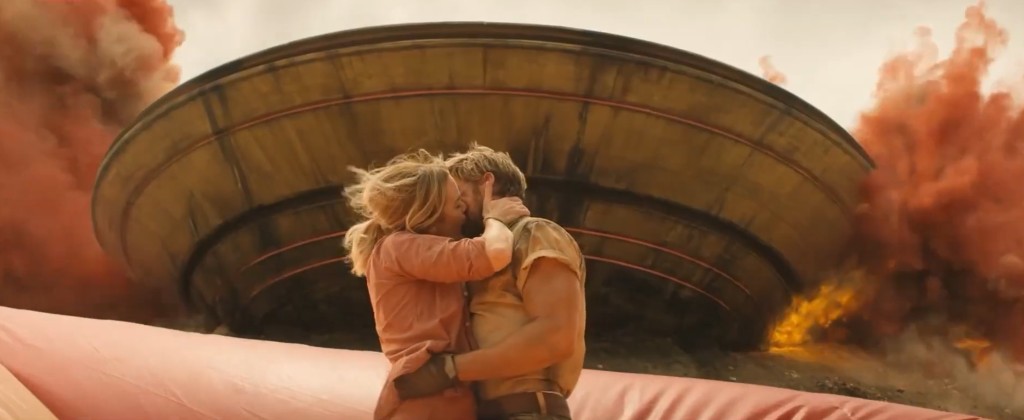
Officially released production stills from Thor: Love and Thunder & The Fall Guy